







What's Happening?
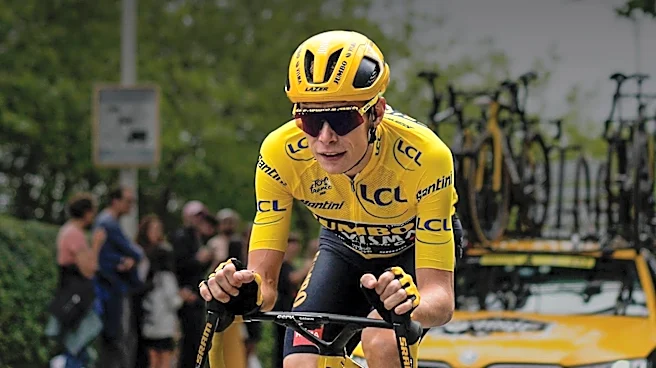
Tadej Pogačar and Jonas Vingegaard, the first- and second-placed riders in the Tour de France, were subjected to middle-of-the-night anti-doping tests. Pogačar was woken at 5 a.m., while Vingegaard was tested at 2 a.m. The unexpected timing of these tests has
raised concerns about their impact on the athletes' performance and recovery. Both riders expressed surprise and noted the disruption to their sleep, with Vingegaard highlighting the potential effect on his performance.
Why It's Important?
The timing of these doping tests has sparked debate over the balance between ensuring fair competition and maintaining athlete welfare. The disruption to the riders' sleep could affect their performance and safety, particularly in a demanding race like the Tour de France. This incident may prompt a reevaluation of testing protocols, especially regarding the timing and conditions under which they are conducted. It also highlights the ongoing challenges in professional cycling related to doping and athlete safety.
Beyond the Headlines
The situation raises ethical questions about the extent to which anti-doping measures should intrude into athletes' personal lives and rest periods. It reflects broader concerns about the pressures faced by elite athletes and the potential for regulatory changes to address these issues. The incident underscores the need for a careful balance between rigorous anti-doping efforts and the well-being of athletes.