







What's Happening?
Cushman & Wakefield is marketing a 27-story office building at 611 Walker St. in Downtown Houston for sale, with the explicit pitch for its demolition and redevelopment. The city of Houston is selling the 767,000 square-foot Bob Lanier Building, constructed
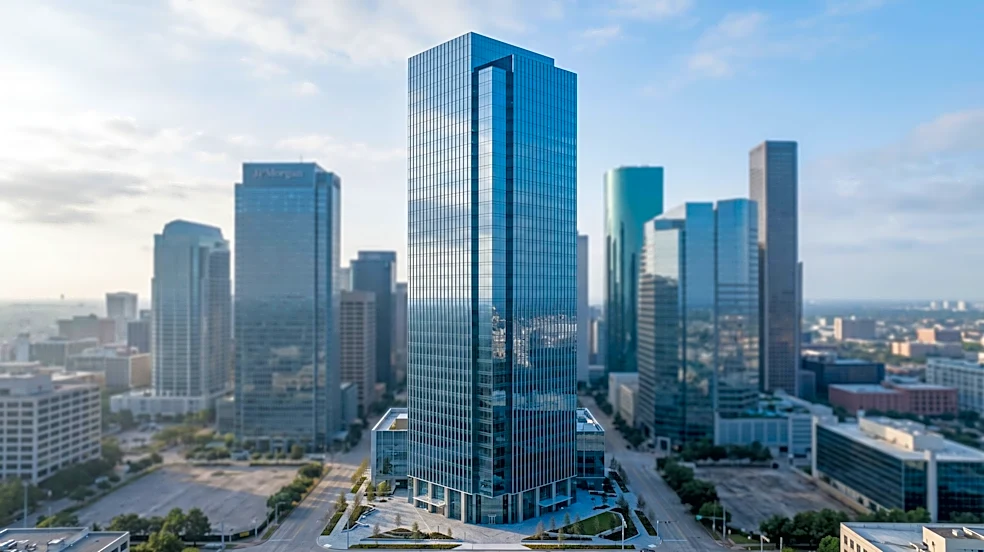
in the late 1960s, as its public works department relocates to the former Continental Airlines headquarters at 1600 Smith St. Tim Relyea of Cushman & Wakefield is leading the marketing efforts, emphasizing the site's prime location near the geographic center of Downtown Houston and Hermann Square. A rendering, created in collaboration with Jon Pickard of Pickard Chilton, showcases the potential for a new high-rise building, though other options like a hotel or residential tower are also being considered. This offering is described as a rare opportunity, with no comparable site having been available in the last half-century.
Why It's Important?
This sale and redevelopment opportunity is significant for Houston's urban landscape and commercial real estate market. The demolition of an older, large office tower to make way for a modern development reflects a broader trend in major U.S. cities to revitalize downtown areas and adapt to changing demands for office, residential, and hospitality spaces. The potential for a new architectural landmark could attract major corporations, national law firms, or investment banks, enhancing Houston's appeal as a business hub. This initiative also highlights the city's proactive approach to leveraging its assets for economic growth and urban renewal. The success of this project could set a precedent for future redevelopment efforts in Houston, demonstrating the viability of transforming aging infrastructure into high-value, contemporary spaces that meet the needs of a dynamic urban environment.
What's Next?
Cushman & Wakefield will continue to market the 611 Walker St. property to potential buyers, emphasizing its unique redevelopment potential. The focus will be on attracting a buyer who can envision and execute a project that aligns with the city's goal of creating a prominent new structure. The next steps will involve evaluating bids from developers and investors, with the city aiming to secure a deal that maximizes the site's value and contributes significantly to downtown revitalization. The outcome of this sale could influence future urban planning decisions and investment trends in Houston's commercial real estate sector. The project's success will also depend on market conditions, including demand for new office, residential, or hotel space, and the availability of financing for large-scale developments.
Beyond the Headlines
The proposed demolition and redevelopment of the Bob Lanier Building touches upon deeper themes of urban evolution and sustainability. While the creation of a new, modern structure can bring economic benefits and aesthetic improvements, it also raises questions about the preservation of architectural heritage and the environmental impact of demolition and new construction. The project signifies a strategic decision to prioritize future-oriented development over the maintenance of older buildings, reflecting a belief that a new, state-of-the-art facility will better serve Houston's long-term economic and social goals. This move could also spark discussions about the optimal use of prime urban land and the balance between historical preservation and modern development in rapidly growing U.S. cities.