






What's Happening?
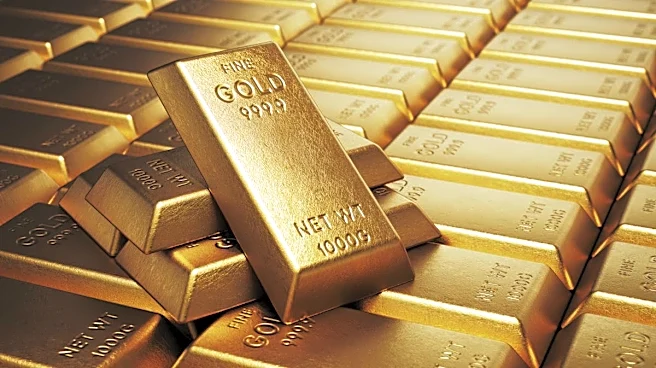
Gold and silver markets are exhibiting bullish tendencies, maintaining positions above key support levels despite facing challenges from a stronger U.S. dollar, rising Treasury yields, and a hawkish Federal Reserve. Analysts are observing this resilience
with cautious optimism, suggesting that these precious metals could experience further upward movement if the current bullish momentum persists. The market is closely monitoring sentiment and broader macroeconomic factors to determine the future trajectory of gold and silver. This sustained performance is notable given the typical inverse relationship between precious metals and a strong dollar or high interest rates, which generally make non-yielding assets less attractive. The current environment suggests a complex interplay of market forces where gold and silver are finding support.
Why It's Important?
The sustained bullish trend in gold and silver, despite adverse economic indicators, is significant for U.S. investors and the broader financial landscape. It suggests a potential shift in investor sentiment towards tangible assets as a hedge against economic uncertainties, including inflation and financial instability. If this trend continues, it could indicate a growing lack of confidence in traditional financial instruments and currencies, prompting a reallocation of capital into precious metals. This could impact the U.S. dollar's strength and Treasury yields, as increased demand for gold and silver might divert investment away from these assets. For individual investors, it highlights the potential for diversification and wealth preservation in a volatile economic climate, while for institutional investors, it signals a need to reassess portfolio strategies in light of evolving market dynamics.
What's Next?
The immediate future for gold and silver will likely depend on the evolution of U.S. monetary policy, particularly the Federal Reserve's stance on interest rates, and the strength of the U.S. dollar. A potential short-term dollar pullback could provide gold with room to rebound, as suggested by some analysts. Market participants will be closely watching for any shifts in the Federal Reserve's rhetoric or economic data that could influence interest rate expectations. Furthermore, the broader sentiment among generalist investors will be a key factor. If more investors begin to embrace precious metals as a strategic financial asset, rather than just a speculative trade, the bullish momentum could strengthen. Conversely, any signs of widespread speculative enthusiasm could signal a potential peak, as historical patterns suggest that bull markets become vulnerable when the narrative becomes universally obvious.
Beyond the Headlines
The current resilience of gold and silver points to deeper implications regarding the perception of financial stability and the role of tangible assets in wealth preservation. In an era marked by persistent debt burdens and complex monetary policy choices, the appeal of assets with no central issuer and a limited supply, like gold and silver, becomes more pronounced. This trend reflects a growing concern among investors about the long-term purchasing power of fiat currencies and the potential for financial repression, where inflation and policy decisions lead to weak or negative real returns for cash and bondholders. The continued accumulation of gold by central banks and the surge in investment demand underscore a strategic shift towards these metals as a hedge against systemic financial risks, moving beyond short-term price speculation to a focus on long-term wealth protection.