






What's Happening?
The global copper market is experiencing a sustained period of record-high prices, largely driven by uncertainty surrounding potential U.S. tariff policies, persistent supply-side issues, and growing demand fueled by artificial intelligence (AI). According
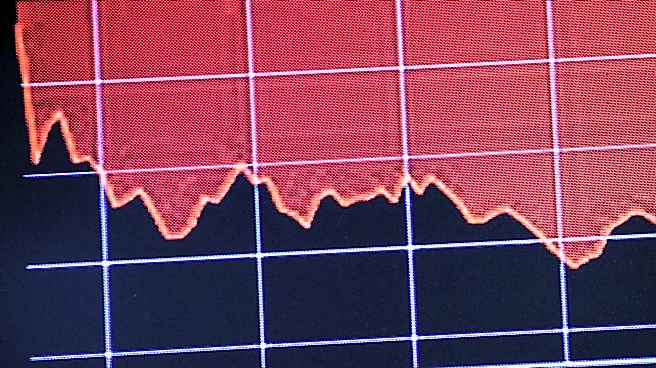
to market research company BMI, copper prices peaked at $14,875/t on September 10, 2026, and remained above $14,000/t as of November 5, largely unaffected by broader macroeconomic headwinds. The prospect of U.S. tariffs on refined copper has prompted market players to stockpile the metal in the U.S., leading to a significant premium in the commodity exchange (Comex) over the London Metal Exchange (LME). This tariff-driven dislocation has resulted in a 61.9% increase in Chicago Mercantile Exchange (CME) copper inventories from the start of the year to November 4, creating an 'artificial deficit' outside the U.S. by constraining global copper availability.
Why It's Important?
The potential U.S. tariff decision on copper holds significant implications for various U.S. industries and the global economy. A tariff could protect domestic copper producers and encourage internal supply, but it might also increase costs for U.S. manufacturers reliant on imported copper, potentially impacting their competitiveness. The current stockpiling behavior in anticipation of tariffs indicates a strategic move by market players to mitigate future price increases, but it also distorts global supply and demand dynamics. Beyond tariffs, the underlying fundamentals of the copper market, such as persistent mine-supply constraints and the emergence of AI as a new demand pillar, are contributing to price volatility. The increasing power consumption of data centers, grid expansion, and electrification further solidifies copper's critical role, making its price stability crucial for technological advancement and infrastructure development in the U.S.
What's Next?
The global copper market is closely watching for the U.S. tariff policy announcement. BMI reports that any softening of protectionist rhetoric or a reduction in tariffs could lead to downward pressure on copper prices, as the embedded tariff premium would be reassessed and stockpiling incentives would diminish. However, a portion of the U.S. copper stockpile is expected to remain, as domestic industry stakeholders aim to shield the country's manufacturing base from supply scarcity and price volatility, aligning with a broader pivot towards securing critical mineral supplies. Structural shifts, including the demand from AI infrastructure and ongoing mine-supply constraints, are expected to continue providing price support. Regulatory friction surrounding AI infrastructure, particularly in U.S. states with shifting executive control, could also introduce slowdown risks for hyperscale pipeline growth, further influencing copper demand and pricing.
Beyond the Headlines
The current situation in the copper market highlights the complex interplay between trade policy, technological innovation, and resource availability. The 'artificial deficit' created by U.S. stockpiling underscores how geopolitical decisions can rapidly alter market dynamics, even for essential commodities. The long lead times for new mining projects (approximately 17 years from discovery to production) mean that supply constraints are a deeply entrenched issue, making the market vulnerable to sudden demand surges or policy changes. The growing demand from AI and electrification initiatives positions copper as a critical mineral for the future, intertwining its market performance with broader trends in technology and sustainable development. This scenario also raises questions about resource nationalism and the strategic importance of securing domestic supply chains for critical materials.