








What's Happening?
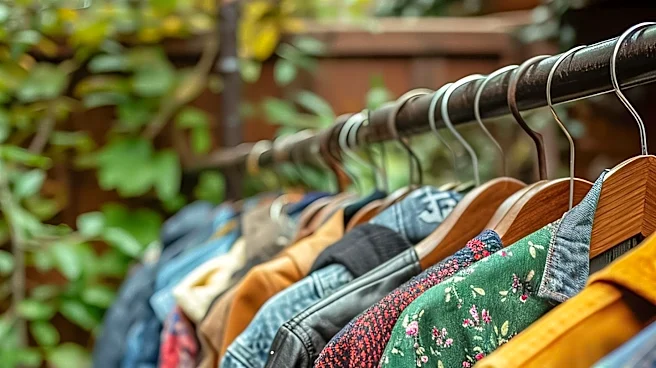
In an effort to save money, many families are turning to local 'Buy Nothing' groups to acquire clothing and other items for free. These groups, part of the global Buy Nothing Project, allow community members to give away items they no longer need. A mother
of five shared her experience of obtaining a new summer wardrobe through her local group, highlighting the benefits of finding a 'size buddy' who was giving away clothes that fit her. This approach not only provided her with a variety of clothing options but also encouraged her to experiment with styles she might not have chosen otherwise. The initiative is particularly beneficial for families on tight budgets, allowing them to save money while still acquiring necessary items.
Why It's Important?
The use of 'Buy Nothing' groups reflects a growing trend towards sustainable consumption and community support. By participating in these groups, families can significantly reduce their spending on clothing, which is often a major household expense. This approach also promotes environmental sustainability by reducing waste and encouraging the reuse of items. For families with children, who frequently outgrow clothing, these groups offer a practical solution to keep up with changing needs without incurring high costs. Additionally, the social aspect of these groups fosters a sense of community and mutual support, which can be particularly valuable in times of economic uncertainty.
What's Next?
As more people become aware of the benefits of 'Buy Nothing' groups, participation is likely to increase. This could lead to the expansion of these groups into more communities, providing even greater access to free resources. Additionally, the success of these groups may inspire similar initiatives focused on other types of goods, further promoting sustainable consumption practices. For individuals, continued engagement with these groups can lead to ongoing savings and a more sustainable lifestyle. Community leaders and organizers may also explore ways to enhance the functionality and reach of these groups, potentially integrating technology to streamline the process of giving and receiving items.