



What's Happening?
Mr Porter, the luxury menswear e-commerce platform, has successfully navigated a challenging period for online luxury retailers, which saw competitors like Matchesfashion enter administration and Farfetch require rescue. CEO Toby Bateman attributes Mr Porter's
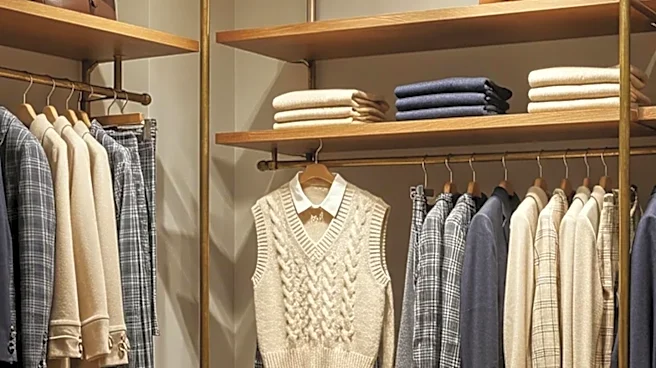
resilience to several strategic decisions. The company maintains a global presence with 300 brands, avoiding over-reliance on any single market or trend. Crucially, Mr Porter has deliberately shifted its brand mix, moving away from entry-level, streetwear-oriented brands to focus on 'mid-tier' labels described as 'quiet luxury contemporary,' such as Drake's, visvim, Our Legacy, and Auralee. This strategy targets a core customer base typically in their 40s, who seek quality and understated style rather than transient fashion trends. Bateman also emphasizes strict control over discounting, running only two sales per year to maintain brand value and margins.
Why It's Important?
Mr Porter's strategy highlights a significant evolution in the luxury e-commerce landscape, moving towards a more discerning customer base and a 'quiet luxury' aesthetic. This approach contrasts with the previous emphasis on hype drops and streetwear, indicating a maturation of the online luxury market. For U.S. consumers, this means a curated selection of high-quality, enduring menswear that prioritizes craftsmanship over fleeting trends. For the broader retail industry, Mr Porter's success provides a case study in sustainable luxury e-commerce, emphasizing customer experience, brand curation, and disciplined pricing strategies over aggressive discounting. The focus on a more mature demographic also signals a potential shift in marketing efforts within the luxury sector, targeting consumers with established purchasing power and a preference for understated elegance.
What's Next?
Mr Porter plans to continue refining its brand portfolio, with CEO Toby Bateman personally reviewing every brand each season to decide what to grow, trim, or cut. The company will also focus on expanding its in-house label, Mr P, which is set to celebrate its tenth anniversary and has become one of the store's largest brands. Customer engagement remains a priority, with Bateman actively meeting clients through exclusive events, such as truffle hunting in Italy or sushi lunches with designers. The platform will also maintain its commitment to high-quality content, with a shift towards video-first production to provide style guidance and address customer needs. The ongoing challenge will be to balance newness and discovery for customers while adhering to a strict no-discounting policy in a competitive market.
Beyond the Headlines
Mr Porter's success in cultivating a 'quiet luxury' niche reflects a broader societal trend towards conscious consumption and investment in quality over quantity. This approach has ethical implications, as it often aligns with brands that prioritize craftsmanship, durability, and potentially more sustainable production practices, moving away from the fast-fashion cycle. Legally, maintaining brand integrity through strict pricing policies helps protect the perceived value of luxury goods and relationships with suppliers. Culturally, the preference for 'quiet luxury' among a mature demographic suggests a shift in how status is signaled, moving from overt displays of wealth to a more subtle appreciation of quality and timeless design. This could influence broader consumer behavior, encouraging more thoughtful purchasing decisions across various product categories.