








What's Happening?
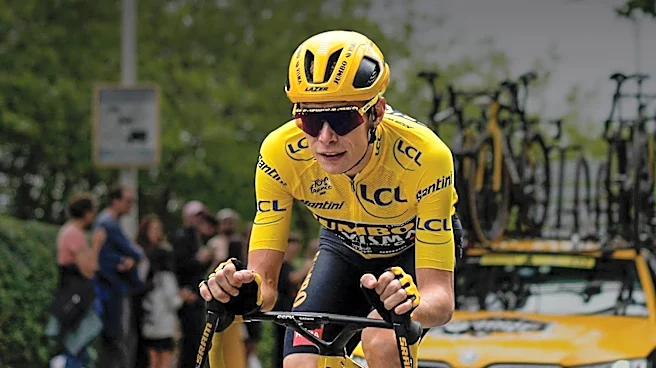
During stage 4 of the Tour de France, Tadej Pogačar of UAE Team Emirates-XRG allowed the yellow jersey to pass to Torstein Træen of Uno-X Mobility. The stage, characterized by high temperatures reaching 40°C, proved challenging for Pogačar, who experienced
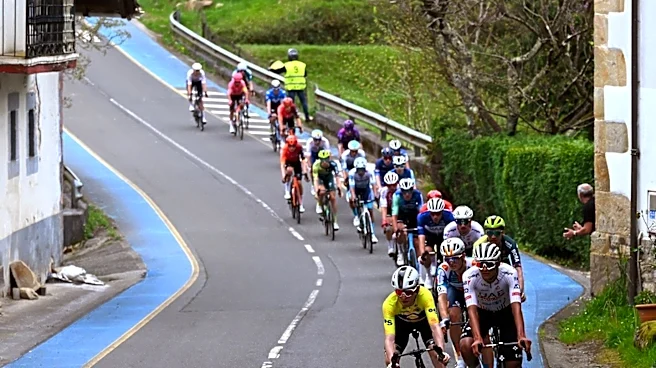
a headache at the start. Despite the heat, Pogačar managed to stay with the peloton, aided by his teammates who provided ice and water. The stage concluded with Pogačar sitting fourth overall, 7:53 behind Træen. The decision to let the jersey go was strategic, allowing Pogačar to conserve energy and reduce post-stage obligations.
Why It's Important?
Pogačar's decision to relinquish the yellow jersey highlights the strategic considerations in professional cycling, particularly in managing energy and resources during grueling stages. The extreme heat conditions underscore the physical demands on cyclists and the importance of team support in maintaining performance. This development shifts the race dynamics, as Træen now leads, potentially altering team strategies and media focus. The change in leadership may also impact sponsorship visibility and athlete exposure. As the Tour progresses, the ability to adapt to environmental challenges will be crucial for contenders aiming for overall victory.
What's Next?
With Træen now in the lead, Pogačar and his team will likely focus on regaining the yellow jersey in upcoming stages. The continuation of high temperatures could influence race strategies, with teams needing to balance aggression with conservation. The upcoming mountain stages, including the Col du Tourmalet, will be critical in determining the overall standings. Pogačar's experience and team support will be pivotal in navigating these challenges. The race's progression will be closely watched by fans and analysts, as the competition remains open with several contenders vying for the top position.