





What's Happening?
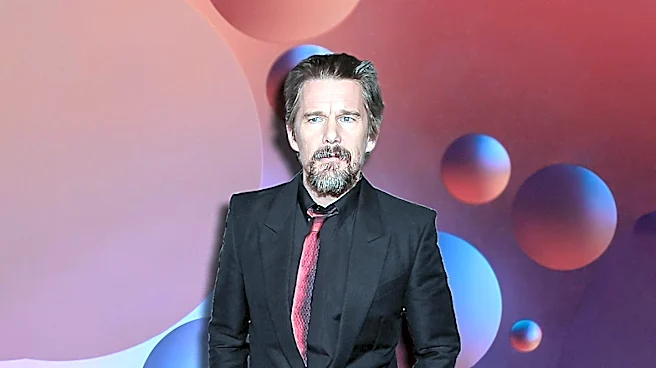
American actor Ethan Hawke recently shared his long-standing admiration for the 1998 science fiction film 'Gattaca,' directed by Andrew Niccol. Despite the film's initial lukewarm reception, Hawke has consistently championed it, calling its screenplay
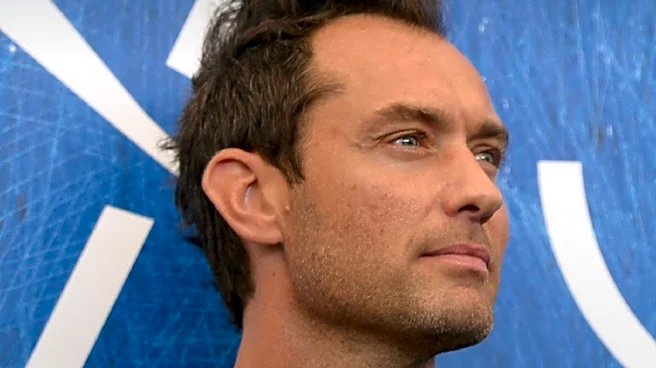
the best he has ever read. He recalled his experience filming 'Gattaca' alongside Jude Law and Uma Thurman, emphasizing the cast's enjoyment during production. Hawke highlighted the film's profound narrative, which he believes captures the spirit of science fiction author Ray Bradbury. The film, designated by NASA as one of the most plausible sci-fi works, explores a future where genetic engineering dictates social standing. Hawke recounted a personal anecdote where former President Bill Clinton praised 'Gattaca' to him, reinforcing his belief in the film's quality.
Why It's Important?
Ethan Hawke's continued advocacy for 'Gattaca' underscores the film's enduring cultural and thematic relevance, particularly in discussions surrounding genetic engineering, societal discrimination, and the pursuit of human potential. His comments draw renewed attention to a film that, while not a box office hit upon release, has gained significant critical acclaim and a dedicated following over time. This re-evaluation by a prominent actor like Hawke can influence contemporary audiences and filmmakers, encouraging a deeper appreciation for thought-provoking science fiction that tackles complex ethical questions. The film's premise, where individuals are judged by their genetic makeup rather than their abilities, remains a potent commentary on societal biases and the potential pitfalls of advanced biotechnology, making it relevant to ongoing debates about genetic privacy and equality.
What's Next?
While there are no immediate announcements regarding a sequel or remake of 'Gattaca,' Ethan Hawke's renewed public appreciation could spark increased interest in the film. This might lead to more discussions, retrospectives, or special screenings, particularly within academic and film communities. The film's themes of genetic discrimination and human perseverance are likely to continue resonating as advancements in genetic technology progress, potentially inspiring new works that explore similar ethical dilemmas. Hawke's anecdote about President Clinton's endorsement further solidifies 'Gattaca's' place in cinematic history, suggesting its continued relevance as a touchstone for discussions on science, ethics, and human ambition.
Beyond the Headlines
Beyond its narrative, 'Gattaca' delves into profound philosophical questions about destiny versus free will and the definition of human perfection. The film critiques a society that prioritizes genetic predisposition over individual effort and spirit, raising ethical concerns about the potential for a new form of eugenics. Hawke's deep connection to the screenplay highlights the power of storytelling to explore complex societal issues and provoke introspection. The film's enduring appeal lies in its ability to challenge viewers to consider the moral implications of scientific progress and the importance of human resilience in the face of systemic barriers. It serves as a cautionary tale about the dangers of a genetically stratified society and a celebration of the human spirit's capacity to overcome perceived limitations.