







What's Happening?
Wolong Electric and Nanjing AE System Technology (AEAUTO) are entering the burgeoning market for converting diesel mining trucks to electric power. This market, often referred to as 'oil-to-electric' in China, is seeing increased activity from various
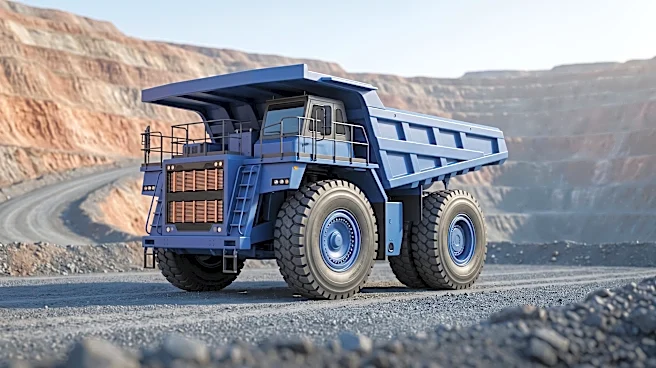
companies. AEAUTO offers comprehensive battery electric vehicle modification kits and charging systems for large mining equipment, including loaders, bulldozers, and mechanical drive trucks. The company currently has the capability to convert trucks up to 100-ton class and has already converted Caterpillar 777 units in Pakistan and Southeast Asia. Wolong Electric, a major electric motor and drive company headquartered in China, recently held a launch conference for its mining vehicle unmanned electrification system solution. This event introduced Wolong's oil-to-electric conversion program for mining vehicles, alongside offerings in autonomous haulage and high-efficiency electric drive systems. Wolong showcased a 70-ton class wide-body mining truck oil-to-electric prototype, which was a converted YTK105D diesel truck, equipped with a 500 kW permanent magnet synchronous motor and an 801 kWh battery system supporting fast charging.
Why It's Important?
The entry of Wolong Electric and AEAUTO into the diesel-to-electric mining truck conversion market signifies a critical step towards decarbonizing heavy industry and improving operational efficiency. This trend is important for U.S. mining operations as it offers a pathway to reduce fuel and maintenance costs, lower carbon emissions, and extend the lifespan of existing equipment, thereby reducing capital investment compared to purchasing new electric trucks. The focus on converting older, high-utilization haul trucks, especially those nearing major engine overhauls, presents a significant economic opportunity for mining companies. Electrification also paves the way for unmanned and intelligent operations, which can enhance safety and productivity in open-pit mines. The development of robust conversion kits and supporting energy infrastructure, including charging stations and energy storage, addresses key challenges in transitioning to electric fleets. This market shift could lead to increased demand for specialized electric components and services, impacting suppliers and technology developers in the U.S. and globally.
What's Next?
The market for diesel-to-electric mining truck conversions is expected to expand, with companies like Wolong Electric and AEAUTO continuing to develop and deploy their solutions. Wolong's expansion into overseas markets such as Mongolia, Russia, Australia, Thailand, and Laos indicates a global ambition for these conversion technologies. This suggests that U.S. mining companies may soon see more readily available and cost-effective options for electrifying their fleets. Further advancements in battery technology, electric drive systems, and autonomous control will likely improve the performance and economic viability of these conversions. The collaboration between conversion specialists and original equipment manufacturers, as seen with Wolong and Yutong, could lead to more integrated and optimized solutions. The industry will also focus on developing comprehensive support services, including technical assistance and lifecycle support, to ensure the successful adoption and operation of converted electric mining trucks.
Beyond the Headlines
The shift towards electric mining trucks, driven by conversion solutions, has profound implications for environmental sustainability and the future of industrial operations. By significantly reducing diesel consumption and associated emissions, these conversions contribute to global efforts to combat climate change and improve air quality in mining communities. Beyond environmental benefits, the integration of electric powertrains with autonomous and intelligent control systems represents a paradigm shift in mining, moving towards highly automated, safer, and more efficient operations. This transformation could redefine labor requirements, necessitating new skill sets for maintenance and operation of advanced electric and autonomous machinery. The economic advantages, such as reduced operating costs and extended asset life, could also make mining operations more resilient to fluctuating fuel prices and stricter environmental regulations, fostering a more sustainable and technologically advanced mining sector globally.