



What's Happening?
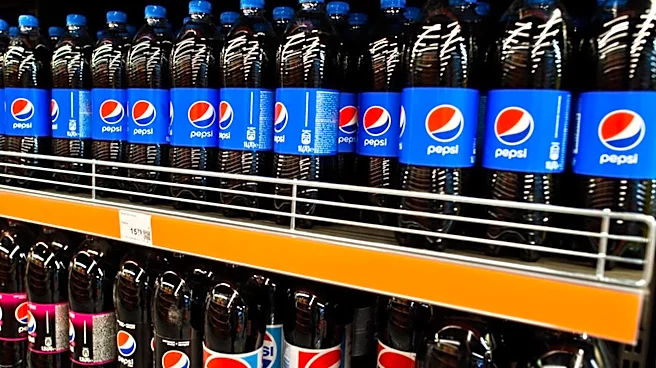
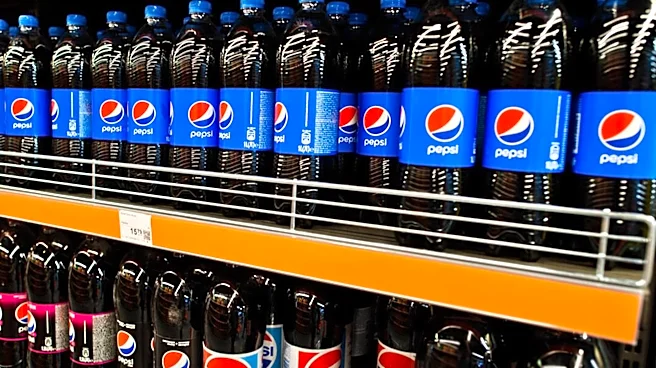
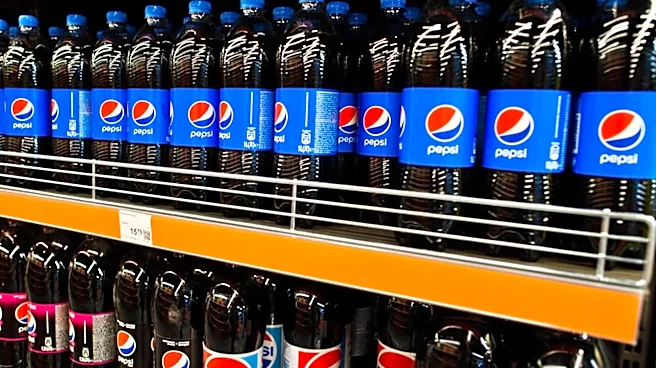
PepsiCo has revised its core earnings per share growth forecast for fiscal year 2026 to 3.0% at the midpoint, down from its previous projection of 6.0% made in July. This adjustment comes despite an increase in its net revenue growth forecast to 6.0% from 5.0%,
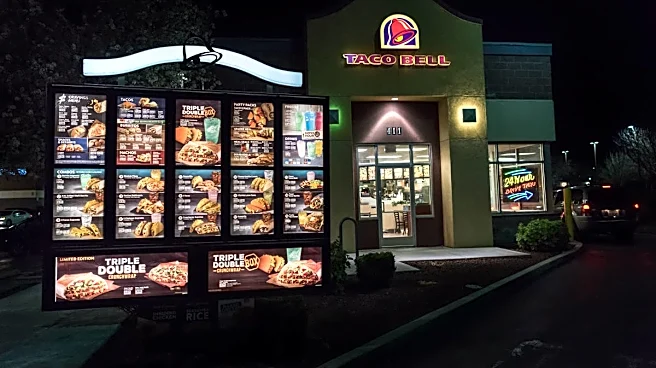
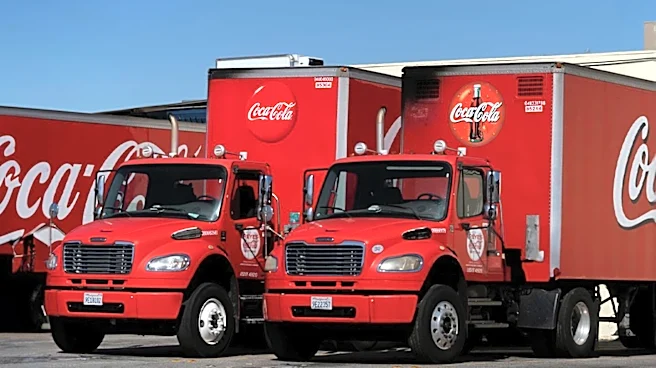
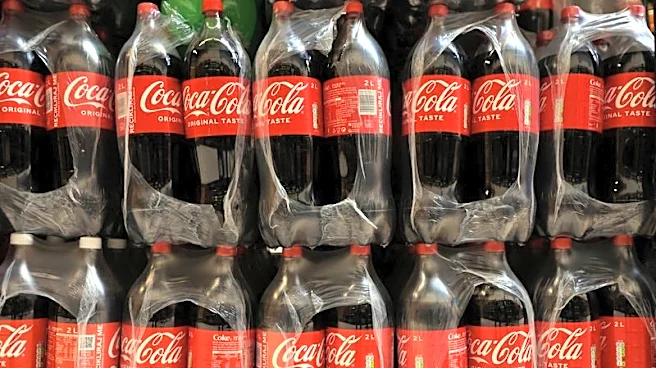
indicating a focus on sales rather than profit. The company's two largest North American businesses, PepsiCo Beverages North America and PepsiCo Foods North America, experienced slow growth in fiscal 2025, with revenues rising by 1.5% and 0.35% respectively. In contrast, its Europe, Middle East, and Africa segment saw an 8.2% growth. A significant development in the beverage sector is KFC's reported decision to partner with Coca-Cola, moving away from PepsiCo. However, PepsiCo has renewed its U.S. partnership with Taco Bell, a sister chain of KFC, through 2036. The company's free cash flow has shown strong growth, reaching $10.5 billion in the four fiscal quarters ending September 5, 2026, up from $6.79 billion a year prior, with revenue growing 6.4% over the same period.
Why It's Important?
The lowered earnings forecast by PepsiCo signals potential challenges for the company's profitability, even as its revenue projections increase. This divergence suggests that while sales volume may be growing, the cost of doing business or competitive pressures are impacting the bottom line. The slow growth in North American beverage and food segments, which are key markets for PepsiCo, highlights a need for strategic adjustments in these regions. The loss of KFC as a beverage partner could impact PepsiCo's market share in the food service industry, although the renewed partnership with Taco Bell provides some stability. For investors, the situation presents a mixed signal: strong free cash flow growth indicates financial health and the ability to generate cash, but the reduced earnings outlook could temper enthusiasm for future profit expansion. The company's stock is currently trading at a lower price-to-earnings ratio compared to the S&P 500, suggesting the market is already factoring in some of these concerns.
What's Next?
PepsiCo is scheduled to release its next financial results in February 2027. Investors will be closely monitoring several key metrics, including whether free cash flow continues its upward trend, especially in light of the revised earnings forecast. Another critical aspect to watch will be the company's operating income and its ability to comfortably cover interest expenses. The full fiscal year's free cash flow and net debt at the end of the fiscal year will be crucial figures in the upcoming report. The company's strategy for its North American businesses, particularly in response to the slow growth and competitive shifts like the KFC partnership change, will also be under scrutiny. Management's plans for pricing in 2027, following earlier price cuts, will be a significant factor in future sales and profitability.
Beyond the Headlines
The situation at PepsiCo reflects broader trends in the consumer goods industry, where companies are navigating a complex landscape of evolving consumer preferences, competitive pressures, and supply chain dynamics. The emphasis on revenue growth over profit growth could indicate a strategy to maintain or expand market share in a competitive environment, even if it means tighter margins. The shift in partnerships, such as KFC moving to Coca-Cola, underscores the dynamic nature of corporate alliances and the constant battle for market dominance in the beverage sector. For a company like PepsiCo, which relies heavily on its brand portfolio, maintaining strong relationships with major food service chains is crucial. The company's ability to generate substantial free cash flow, despite the earnings forecast adjustment, highlights its operational efficiency and the resilience of its core businesses, providing a buffer against market volatility and enabling strategic investments or shareholder returns.