






What's Happening?
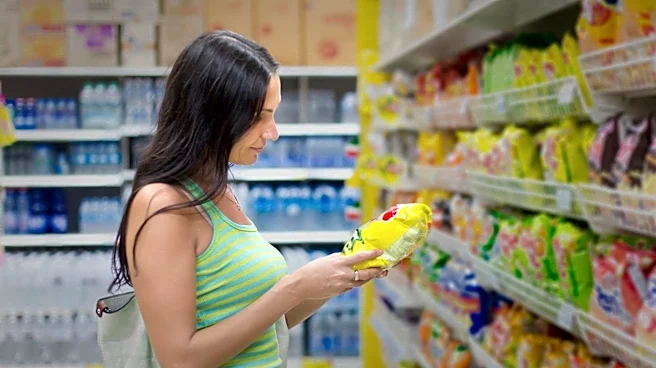
New consumer research from GS1 US, a non-profit supply chain standards organization, indicates that food recalls have a substantial impact on consumer purchasing behavior and trust in brands. The survey found that 67% of consumers avoided an entire food category
following a recall, demonstrating a 'halo effect' where recalls can negatively influence products and brands not directly involved. While 66% of consumers were hesitant to repurchase a recalled product or brand, only 9% stated they would never do so, suggesting that consumers are willing to give brands a second chance if the issue is addressed appropriately. This highlights the critical need for transparency and effective communication from brands during recall events.
Why It's Important?
The findings underscore the escalating stakes for food brands in managing recalls, especially with increasingly consolidated supplier networks that can broaden the reach of contamination events. The 'halo effect' means that a single recall can damage consumer confidence across an entire food category, impacting numerous businesses. As the food industry prepares for compliance with FDA Food Safety Modernization Act (FSMA) Rule 204 in 2028, which mandates enhanced traceability for high-risk foods, the ability to quickly and accurately identify affected products becomes not just a regulatory requirement but a crucial competitive advantage. Brands that can demonstrate clear understanding and swift corrective actions are more likely to rebuild consumer trust and mitigate long-term financial and reputational damage.
What's Next?
Brands are expected to prioritize investments in traceability technologies, such as QR codes and next-generation 2D barcodes, to meet upcoming regulatory requirements and enhance consumer trust. These tools will enable more precise identification of affected products, provide consumers with detailed product information, and prevent recalled items from being sold. The industry will likely see a greater emphasis on transparent communication strategies during recall events, with brands focusing on clearly explaining what happened, which products were affected, and the corrective actions taken. This shift will transform traceability from a mere compliance exercise into a fundamental aspect of brand integrity and consumer relationship management, fostering an industry-wide commitment to information sharing and safety.
Beyond the Headlines
The profound impact of food recalls on consumer behavior extends beyond immediate purchasing decisions, touching upon deeper societal trust in the food supply chain. The 'halo effect' suggests a collective vulnerability, where the failure of one brand can erode confidence in an entire sector, potentially leading to broader economic implications. This situation highlights the ethical imperative for food producers to prioritize safety and transparency, not just for their own brand's survival but for the stability of the entire industry. The increasing demand for detailed product information and the adoption of advanced traceability technologies also reflect a growing consumer desire for accountability and control over their food choices, pushing the industry towards a more transparent and responsible future.