

What's Happening?
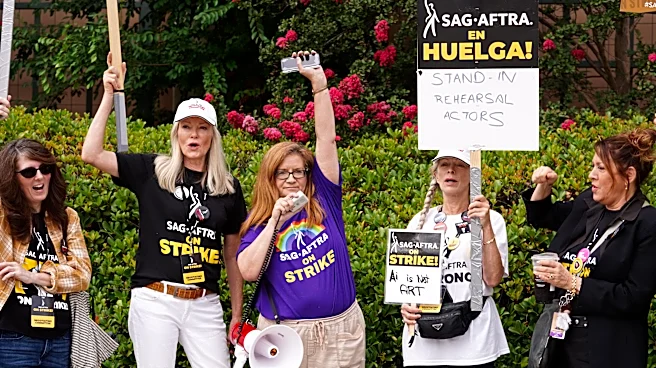
Tilly Norwood, the world's first AI-generated actor, created by Xicoia, the AI division of Particle6 in 2025, has sparked significant controversy within the entertainment industry. SAG-AFTRA, the union representing actors and other media professionals,
has publicly criticized the AI-generated actress and expressed strong opposition to the replacement of human performers with synthetic counterparts. This development highlights growing concerns among actors regarding the impact of artificial intelligence on their profession. While live theater is perceived by some as less vulnerable to AI's reach due to its inherent human connection, the emergence of AI-generated actors like Norwood in film raises questions about the future of human roles in other forms of media. A May 2026 Gallup analysis indicated that actors and dancers currently have relatively low exposure to earning declines attributable to generative AI compared to other creative occupations, yet the union's stance underscores a proactive effort to protect human talent.
Why It's Important?
The emergence of Tilly Norwood and SAG-AFTRA's opposition signifies a critical juncture for the U.S. entertainment industry and the broader labor market. This situation directly impacts the livelihoods and future prospects of human actors, writers, and other creative professionals. If AI-generated actors become widely adopted, it could lead to a significant reduction in demand for human talent, potentially driving down wages and increasing unemployment in the sector. For unions like SAG-AFTRA, this represents a fundamental challenge to their mission of protecting workers' rights and ensuring fair compensation. The debate also touches upon the artistic integrity of performances, with many arguing that AI cannot replicate the unique human connection and emotional depth that live actors bring. This development could force a re-evaluation of intellectual property laws, performance rights, and ethical guidelines surrounding AI's role in creative industries, setting precedents for how other sectors might grapple with similar technological advancements.
What's Next?
The controversy surrounding Tilly Norwood is likely to intensify, prompting further discussions and potential negotiations between entertainment industry stakeholders, technology companies, and labor unions. SAG-AFTRA is expected to continue advocating for policies and contracts that safeguard human performers' jobs and rights against AI displacement. This could include pushing for regulations on the use of AI in film and television production, as well as negotiating new collective bargaining agreements that address AI's role. The industry may see increased efforts to define the boundaries of AI's application in creative fields, potentially leading to legal challenges over intellectual property and the definition of 'performance.' The reception of Norwood's upcoming film, 'Misaligned,' where she stars as a computer-generated being, will also be a key indicator of public and industry acceptance of AI actors, influencing future investment and development in this technology.
Beyond the Headlines
The rise of AI-generated actors like Tilly Norwood extends beyond immediate job displacement concerns, touching upon profound ethical and philosophical questions about creativity, authenticity, and the human experience. It challenges the traditional understanding of artistry, prompting a re-evaluation of what constitutes a 'performance' and whether AI can truly embody the nuances of human emotion and connection. This development could lead to a societal shift in how audiences perceive and value artistic creations, potentially blurring the lines between human and artificial expression. Furthermore, the ethical implications of creating sentient-like AI entities for entertainment, and their potential impact on human self-perception, will likely become a growing area of debate. The long-term cultural impact could be significant, influencing how stories are told, how art is consumed, and ultimately, what it means to be a creator in an increasingly technologically advanced world.