






What's Happening?
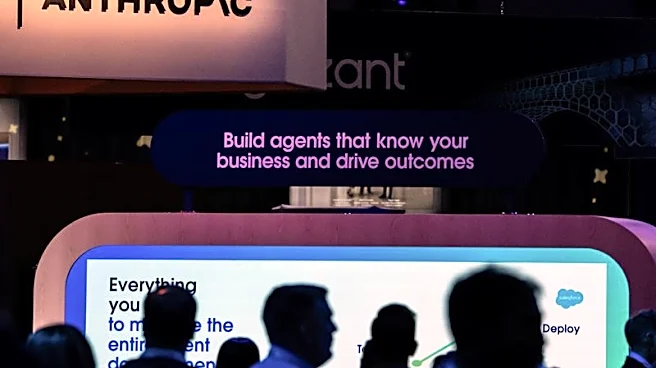
Accenture has announced a significant partnership with Anthropic, a leading AI developer, to embed evaluators within Anthropic to red-team its frontier AI models, conduct alignment assessments, and test safeguards. This collaboration is part of a broader
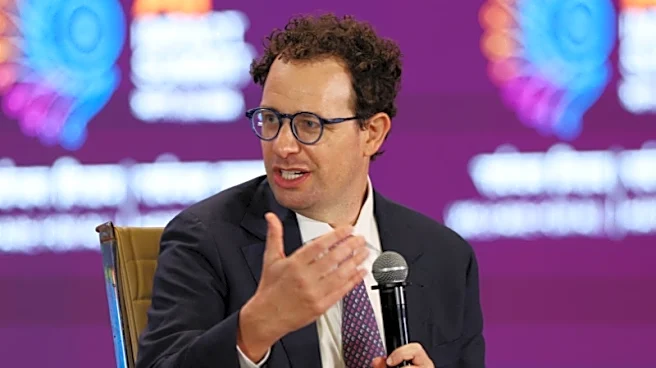
commitment where both companies expect to invest at least $1 billion each over five years, totaling a $2 billion investment. Accenture's role will involve providing employee-level access to Anthropic's systems, allowing for in-depth evaluation. The work will be led by Faculty, a British AI company acquired by Accenture in January, which has prior experience working on model safety with major AI labs including OpenAI and Anthropic. This initiative marks the first concrete implementation of a commitment made by Anthropic's Dario Amodei regarding AI safety and evaluation.
Why It's Important?
This partnership is crucial for the advancement of AI safety and responsible AI deployment, particularly in the U.S. and globally. By embedding evaluators directly within Anthropic, Accenture aims to provide a more thorough and continuous assessment of AI models, which is vital as AI technologies become more sophisticated and integrated into critical systems. The substantial financial commitment from both companies underscores the growing recognition of the need for robust AI evaluation mechanisms. This collaboration could set a precedent for how AI developers and independent evaluators work together, potentially influencing future industry standards and regulatory frameworks. The involvement of Accenture, a major consulting firm with extensive experience in deploying AI for large corporations and government agencies, highlights the practical and operational challenges of ensuring AI safety at scale.
What's Next?
Anthropic has indicated that while it is directly funding Accenture's work, it believes that long-term funding for AI evaluation should come from pooled or government sources, as such mechanisms do not currently exist. The company plans to work with different evaluators under various funding arrangements and has stated that more evaluators will be announced in the coming weeks. Accenture is also expected to perform similar evaluation work for other AI developers, suggesting a potential expansion of this model across the AI industry. The development of standards for what information embedded evaluators should access and how they should report their findings remains an unresolved issue. The industry will be watching to see if other major AI developers, such as OpenAI, follow suit with similar commitments and partnerships for independent evaluation.
Beyond the Headlines
The arrangement raises deeper questions about the independence and objectivity of AI evaluation when the evaluated party directly funds the evaluator. While Anthropic acknowledges this structural problem, it argues that current alternatives for independent funding are lacking. This situation highlights a fundamental tension in the rapidly evolving AI landscape: the need for rigorous safety assessments versus the commercial realities of AI development and deployment. The partnership also underscores the consolidation of AI assurance capabilities within large integrators, potentially impacting the role of non-profit organizations in AI safety. The lack of established standards for embedded evaluators' access and reporting obligations means that the governance of AI safety is largely defined by the companies being examined, which could have long-term implications for public trust and regulatory oversight of AI technologies.