




What's Happening?
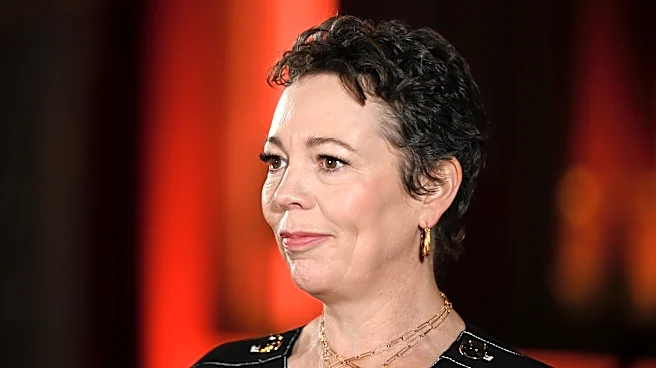
Actress Olivia Colman is generating significant discussion with her new glamorous gray hairstyle, which she debuted during the press tour for her film 'Wicker.' This look, featuring long, silvery curls, is being seen as a challenge to long-standing societal
expectations for women to conceal gray hair and adopt shorter styles as they age. Colman's hairstylist, Clayton Hawkins, and extension specialist, Inanch Emir, have openly shared the process behind achieving this look, including the use of four shades of gray extensions. This transparency highlights that while the result is glamorous, it is not necessarily low-maintenance or entirely natural, offering a more realistic perspective on celebrity appearances. The public and media response has largely been positive, with many praising her for embracing gray hair in a stylish and romantic way.
Why It's Important?
Olivia Colman's decision to publicly embrace and glamorize gray hair holds significant cultural importance, particularly for women in the U.S. and globally. For decades, women have faced pressure to dye their hair to appear younger, often associating gray hair with aging and a decline in attractiveness or competence. Colman's high-profile example, especially as a romantic lead in a film, provides a powerful counter-narrative. It suggests that gray hair can be stylish, sexy, and compatible with a glamorous image, potentially empowering other women to embrace their natural hair color without fear of negative societal judgment. This shift could influence beauty standards, reduce the pressure on women to conform to anti-aging norms, and foster a more inclusive representation of age and beauty in media and everyday life. The transparency about her hair extensions also demystifies celebrity beauty, promoting a more honest dialogue about the effort behind polished looks.
What's Next?
The impact of Olivia Colman's gray hair transformation is likely to continue influencing beauty trends and discussions around aging. We may see an increase in women, both celebrities and the general public, opting to embrace or style their gray hair rather than conceal it. This could lead to a greater demand for products and services catering to gray hair care and styling, potentially shifting market trends in the beauty industry. Furthermore, her example could encourage more open conversations about ageism and unrealistic beauty standards in Hollywood and beyond. As more public figures challenge these norms, there's a potential for a broader cultural acceptance of natural aging, leading to a more diverse and authentic representation of women across different age groups in media and advertising.
Beyond the Headlines
Beyond the immediate impact on beauty trends, Olivia Colman's gray hair moment touches upon deeper ethical and cultural implications. It highlights the pervasive nature of ageism and sexism in society, where women are often judged more harshly for visible signs of aging than men. By openly showcasing a glamorous gray look, Colman is subtly challenging the commercial pressures that drive the anti-aging industry, which often profits from women's insecurities about growing older. Her transparency about extensions also raises questions about authenticity in celebrity culture and the often-unrealistic beauty standards presented to the public. This development could contribute to a broader cultural shift towards valuing natural beauty and self-acceptance, fostering a more inclusive and less age-discriminatory environment for women in various spheres of life.