
What's Happening?
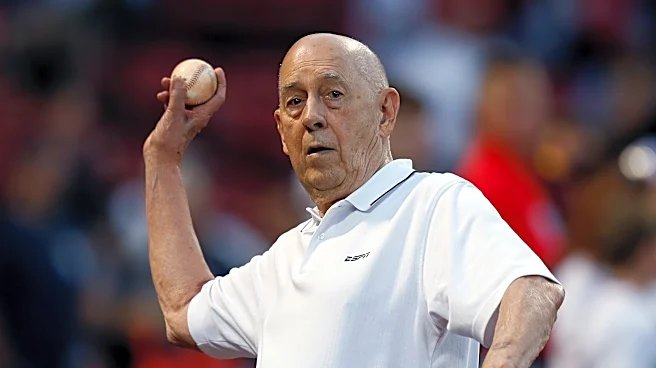
William F. Rasmussen, the visionary founder of ESPN, passed away on August 18, 2026, at the age of 93 due to complications from Parkinson’s Disease. Rasmussen, a former sports broadcaster and public relations
executive, conceived the idea for a 24-hour cable sports network in 1978 with his son, Scott, while stuck in traffic. This idea materialized into the Entertainment and Sports Programming Network, later known as ESPN, which launched on September 7, 1979. Under Rasmussen's leadership as its first president, ESPN introduced round-the-clock sports programming and groundbreaking coverage, including the early rounds of the NCAA men’s basketball tournament in 1980. His entrepreneurial spirit and passion for sports fundamentally reshaped the landscape of sports media, leading to the creation of SportsCenter, a program that has aired the most episodes in television history.
Why It's Important?
Bill Rasmussen's passing marks the end of an era for sports broadcasting and media. His innovative concept of a dedicated 24-hour sports network revolutionized how sports content is consumed in the United States and globally. ESPN's creation provided an unprecedented platform for sports news, analysis, and live events, significantly impacting the sports industry's growth and commercialization. The network's success demonstrated the viability of niche cable programming, paving the way for numerous other specialized channels. Rasmussen's vision not only created a media giant but also fostered a deeper engagement between sports fans and their favorite teams and athletes, making sports an ever-present part of American culture. His legacy is evident in ESPN's continued dominance and its role in shaping modern sports journalism and entertainment.
What's Next?
While Bill Rasmussen's direct involvement with ESPN concluded in 1980, his foundational vision continues to guide the network. ESPN, now a global entity with multiple channels, digital platforms, and a significant international presence, will likely continue to honor his legacy through its commitment to comprehensive sports coverage and innovation. The company's leadership, including Chairman Jimmy Pitaro, has consistently acknowledged Rasmussen's pivotal role in ESPN's inception and success. His passing may prompt further reflections on the network's origins and its future direction in an evolving media landscape, particularly as it navigates new technologies and changing consumption habits. Tributes and recognitions of his contributions are expected from the sports and media communities.
Beyond the Headlines
Rasmussen's story extends beyond just founding a television network; it embodies the spirit of American entrepreneurship and the power of a singular idea to transform an entire industry. His decision to pursue a 24-hour sports channel, at a time when satellite technology was nascent, was a significant risk that paid off immensely. This venture not only created a new business model but also democratized access to sports content, making it available to a broader audience than ever before. Furthermore, Rasmussen's later advocacy for Parkinson's patients, after publicly disclosing his diagnosis, highlights a personal commitment to philanthropy and public awareness. His life demonstrates how innovation in one field can lead to broader societal impacts, from media consumption habits to health advocacy.