



What's Happening?
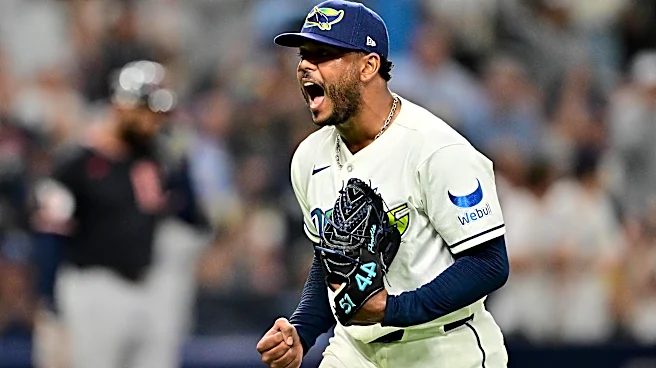
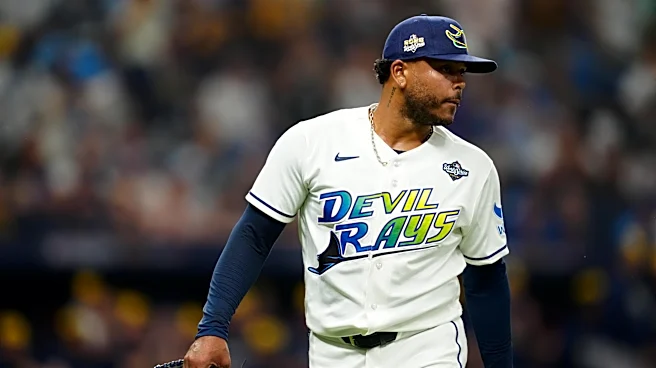
Tampa Bay Rays manager Kevin Cash expressed gratitude for his team's performance despite their 4-1 loss to the Milwaukee Brewers in Game 5 of the World Series. The Brewers secured their first World Series title in franchise history, defeating the Rays in St.
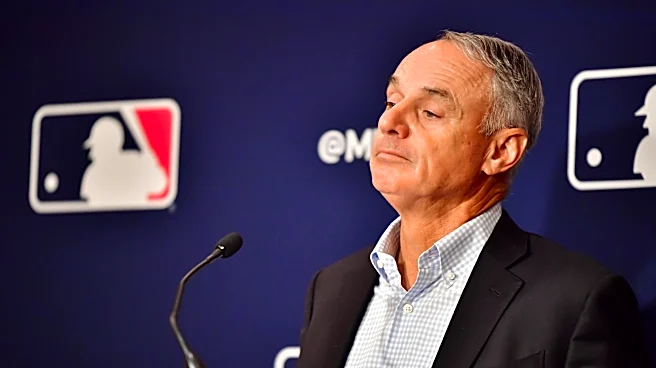
Petersburg, Florida. Cash acknowledged his team was 'banged-up and hurting' but praised their season-long effort and close-knit dynamic. This World Series featured two teams with lower payrolls, with the Brewers ranking 19th and the Rays 25th as of August 31. The victory for the Brewers marks a significant achievement for a small-market team. The broader context of this series is overshadowed by a potential Major League Baseball lockout, which is anticipated to begin on December 2, 2026, and could jeopardize the 2027 season. Owners are advocating for a salary cap, a measure historically opposed by the players' association.
Why It's Important?
The outcome of this World Series, featuring two lower-payroll teams, highlights a central point of contention in the ongoing labor dispute between MLB owners and the players' association: competitive balance and salary caps. Owners argue that a salary cap is necessary for small-market teams to compete, while players view it as a means to suppress salaries and increase franchise values. A lockout would have significant economic repercussions for the league, players, and associated businesses, potentially leading to missed games and a loss of fan engagement. The debate over a salary cap affects the financial structure of the entire league, influencing player contracts, team spending, and the overall economic health of Major League Baseball. The current situation underscores the deep divisions that could lead to a prolonged work stoppage, impacting the sport's future.
What's Next?
The immediate future of Major League Baseball is dominated by the looming lockout, expected to commence on December 2, 2026. This will initiate a period of intense negotiations between MLB owners and the players' association regarding a new collective bargaining agreement. The primary sticking point remains the owners' push for a salary cap, which players have consistently rejected. If an agreement is not reached, the 2027 MLB season could face delays or cancellations, leading to significant financial losses for all stakeholders. The resolution of this dispute will determine the economic framework of the league for years to come, impacting player salaries, team valuations, and the competitive landscape of the sport. Both sides will need to find common ground to avoid a prolonged work stoppage.
Beyond the Headlines
The labor dispute in Major League Baseball extends beyond mere financial negotiations; it touches upon fundamental philosophical differences regarding the sport's economic model and competitive integrity. The owners' desire for a salary cap, framed as a solution for competitive balance, is seen by players as an attempt to control costs and maximize profits at the expense of player earnings. This conflict raises questions about the equitable distribution of revenue in professional sports and the balance of power between ownership and labor. A lockout could erode fan loyalty and damage the sport's public image, particularly if it leads to missed games. The long-term implications could include a shift in how professional sports leagues manage their economic structures and player relations, potentially influencing other major sports leagues in the U.S.