





What's Happening?
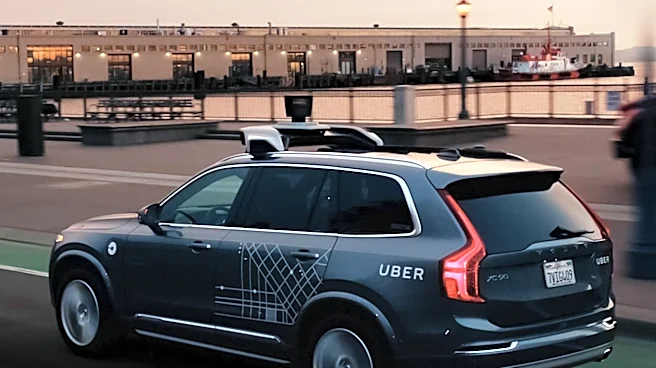
Uber is deploying up to 500 specially equipped Hyundai Ioniq 5s to collect real-world driving data, aiming to accelerate the development of autonomous vehicle (AV) technology by its partners. This initiative, led by Uber's newly created AV Labs unit,
is designed to capture diverse and unusual 'edge cases' that human drivers encounter daily, such as police directing traffic or debris on the road. These human-driven vehicles are outfitted with 14 cameras, eight lidars, nine radars, and onboard computers to gather crucial situational data. The goal is to provide AV developers with the varied data needed to train their AI driving systems, helping them to fine-tune software and improve the AI's ability to respond to different scenarios. Danny Guo, Uber's vice president of engineering and science and head of AV Labs, estimates that 500 cars operating for six months to a year could generate enough diverse, searchable data to be valuable for AV deployment.
Why It's Important?
This initiative is crucial for Uber's long-term robotaxi ambitions, as it seeks to close the technology gap with leaders like Waymo. By leveraging its vast ride-hailing network to collect real-world data, Uber aims to provide its AV partners with a unique advantage in training their AI systems. The collection of 'edge case' data is particularly vital because these rare but critical situations are difficult to simulate and are essential for developing robust and safe autonomous driving systems. This approach could significantly accelerate the progress of Uber's AV partners, enabling them to deploy robotaxis more quickly and safely. The success of this data collection effort could also influence the broader AV industry by demonstrating an effective method for gathering diverse training data, potentially setting a new standard for how AI is developed for autonomous vehicles.
What's Next?
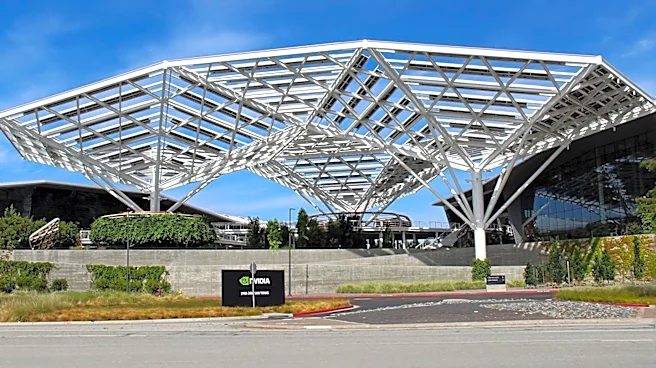
Uber will continue to deploy its specialized Hyundai Ioniq 5 fleet to gather extensive real-world driving data, focusing on capturing diverse and challenging scenarios. The collected data will be provided to Uber's AV partners, including Nvidia and Wayve, to aid in the development and refinement of their robotaxi technology. Uber AV Labs is also in discussions with other potential AV partners to expand its data-sharing agreements. The company will likely analyze the effectiveness of this data collection strategy in accelerating its partners' progress in autonomous driving. The ultimate goal is to enable the widespread deployment of robotaxis on the Uber platform, which would transform its ride-hailing services. The ongoing data collection and AI training efforts are critical steps toward achieving fully autonomous ride-hailing in the future.
Beyond the Headlines
Uber's strategy of using its human-driven fleet to train AI for autonomous vehicles highlights a significant shift in the development paradigm for self-driving technology. Instead of solely relying on dedicated test fleets or simulated environments, Uber is tapping into the vast and varied experiences of its existing drivers. This approach raises interesting ethical considerations regarding the use of human-generated data for AI training, particularly concerning driver privacy and compensation for the data they implicitly contribute. It also underscores the increasing value of real-world data in the age of AI, where the quality and diversity of training data can be a major differentiator in technological advancement. This model could potentially democratize access to crucial training data for smaller AV developers who lack the resources for extensive test fleets, fostering broader innovation in the autonomous driving sector. Furthermore, it blurs the lines between human-operated and autonomous transportation, suggesting a future where the two coexist and mutually inform each other's development.