







What's Happening?
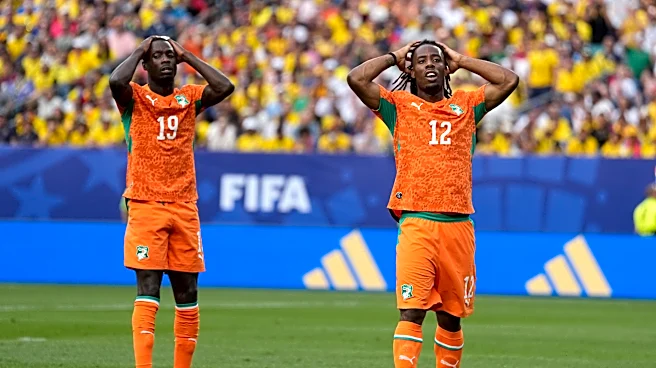
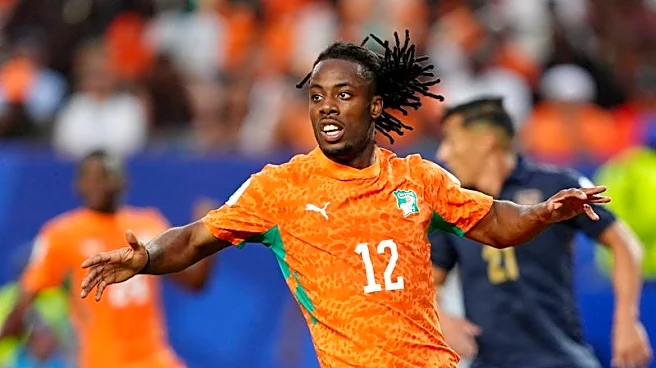
Ivory Coast's national soccer team striker, Elye Wahi, has been granted permission to enter Canada for the team's upcoming World Cup match against Germany. This development follows an investigation into alleged betting-related offenses involving Wahi.
Initially, the Ivorian soccer federation announced that Wahi would not be able to travel to Canada, but later confirmed that the necessary authorizations had been secured. The investigation stems from an unusual amount of bets placed on Wahi receiving a yellow card during a match on May 17 while playing for Nice in the French league. The French soccer league reported this suspicious activity to police and gambling authorities. Wahi was questioned by police but was released without detention. The Ivorian soccer federation has not been officially notified of any proceedings against Wahi and continues to support him as a key player for the national team.
Why It's Important?
The situation surrounding Elye Wahi highlights the ongoing challenges of integrity in sports, particularly concerning betting and match-fixing. The investigation into Wahi's case underscores the vigilance required by sports organizations to maintain fair play and the integrity of competitions. For the Ivory Coast team, Wahi's participation is crucial as he is a significant contributor to their performance. The case also reflects broader issues within international sports, where betting markets can influence player behavior and game outcomes. This incident may prompt further scrutiny and regulatory measures in sports betting, affecting stakeholders such as leagues, teams, and betting companies.
What's Next?
As the investigation continues, it remains to be seen how the findings will impact Wahi's career and the broader sports community. The Ivorian soccer federation's support suggests they will closely monitor developments and respond accordingly. If further evidence emerges, it could lead to disciplinary actions or changes in betting regulations. The outcome of this case may influence how sports organizations handle similar situations in the future, potentially leading to stricter oversight and collaboration with law enforcement to prevent corruption in sports.