







What's Happening?
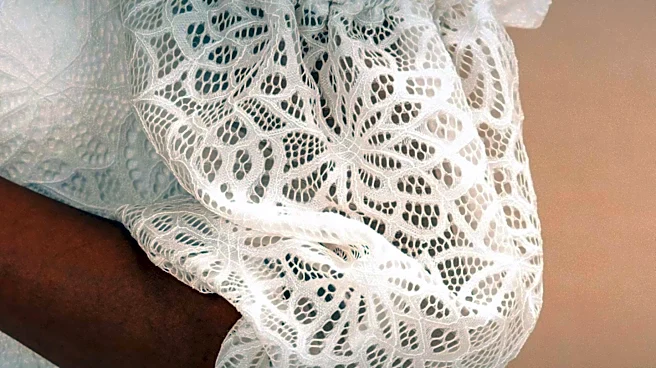
In Paris, the resurgence of lace in fashion is being driven by designers like María Bernad, who uses antique fabrics to create unique, sustainable pieces. Her brand, Les Fleurs Studio, specializes in upcycling lace from the 18th to 20th centuries, crafting
garments that are both luxurious and environmentally conscious. This trend aligns with a broader movement towards sustainability in fashion, where the emphasis is on craftsmanship and the intrinsic value of garments. Lace, with its delicate and intricate nature, is being reimagined in modern fashion, appealing to consumers seeking one-of-a-kind pieces.
Why It's Important?
The upcycling of lace represents a significant shift in the fashion industry towards sustainability and uniqueness. As consumers become more environmentally conscious, the demand for sustainable fashion is rising. This trend not only reduces waste but also revives traditional craftsmanship, offering a counter-narrative to fast fashion. By using antique fabrics, designers like Bernad are preserving cultural heritage while meeting modern demands for exclusivity and sustainability. This approach could inspire other fashion brands to adopt similar practices, potentially transforming industry standards.
Beyond the Headlines
The use of antique lace in fashion also raises questions about the preservation of cultural heritage and the ethical implications of repurposing historical fabrics. As designers navigate these challenges, they contribute to a broader dialogue about the role of fashion in cultural preservation and sustainability. This trend highlights the potential for fashion to serve as a bridge between past and present, offering consumers a tangible connection to history through their clothing choices.