





What's Happening?
Backcountry Tiny Homes, based in New Hampshire, has introduced a new tiny home model called the 'Retirement Retreat.' This dwelling measures 38 feet long and 10 feet wide, built on a triple-axle gooseneck trailer. Its extra width, which exceeds standard
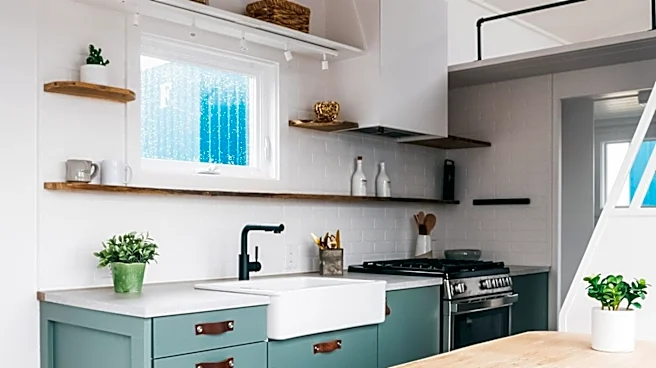
road limits and requires a towing permit, allows for a more spacious interior that resembles a small apartment rather than a typical house on wheels. The exterior features cedar tongue-and-groove paneling, metal siding, and a metal roof, chosen for durability across various climates. Inside, the home boasts painted board and batten walls, knotty pine ceilings, and a mix of engineered hardwood and vinyl flooring. The kitchen is designed in a galley style with a dual basin sink, fridge/freezer, oven, four-burner propane stove, microwave range hood, and quartz counters. Pricing for the 'Retirement Retreat' starts at $91,380 for a shell, $186,575 unfurnished, and $202,950 turnkey, with delivery available across the U.S. and internationally.
Why It's Important?
The introduction of the 'Retirement Retreat' by Backcountry Tiny Homes reflects a significant evolution in the U.S. tiny home market, moving towards larger, more luxurious, and less 'compromise-driven' designs. This trend is important for the housing industry as it caters to a growing demographic seeking flexible living solutions, including retirees and those desiring a minimalist yet comfortable lifestyle. The increased width, while requiring special permits for transport, addresses a key limitation of traditional tiny homes by offering more interior space, which could broaden their appeal. For U.S. consumers, this model provides an alternative to conventional housing, potentially offering more affordable homeownership options or a unique vacation property. The use of durable materials and thoughtful design elements also highlights a focus on long-term value and sustainability, influencing construction practices within the tiny home sector and potentially inspiring innovations in compact living solutions.
What's Next?
The success of wider tiny home models like the 'Retirement Retreat' could encourage other U.S. tiny home builders to explore similar expanded dimensions, potentially leading to a new sub-segment within the tiny home market. This might necessitate adjustments in local zoning laws and transportation regulations to accommodate these larger mobile structures more easily. Consumers can expect to see more diverse and customizable tiny home options that blend the mobility of a tiny house with the spaciousness of a small apartment. The demand for such homes could also drive innovation in compact appliance design and multi-functional furniture to maximize interior utility. Furthermore, the pricing structure, offering various completion levels from shell to turnkey, provides flexibility for buyers, a model that may become more prevalent across the industry. The availability of U.S. and international delivery indicates a growing market reach for these specialized housing solutions.
Beyond the Headlines
The emergence of larger tiny homes like the 'Retirement Retreat' has deeper implications for urban planning and the concept of homeownership in the U.S. While offering flexibility, the need for special towing permits for wider models highlights the regulatory challenges that mobile and alternative housing solutions face. This could spur discussions on updating infrastructure and regulations to better support diverse housing types. Culturally, these homes challenge traditional notions of space and luxury, promoting a lifestyle that prioritizes experiences and mobility over expansive fixed properties. The 'Retirement Retreat' specifically targets retirees, suggesting a shift in how older generations envision their post-career living, potentially impacting demand for traditional retirement communities. Environmentally, the focus on durable materials and efficient design in tiny homes contributes to a broader conversation about sustainable living and reducing ecological footprints, even as the homes themselves grow in size.