




What's Happening?
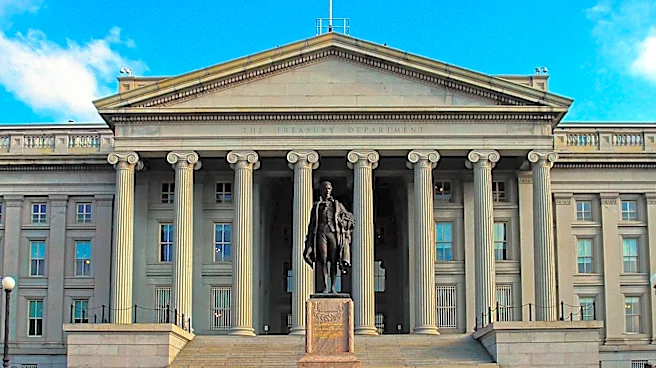
Treasury Secretary Scott Bessent stated on Friday, November 13, 2026, that the Federal Reserve should avoid raising interest rates "too much" in response to an energy supply shock that he believes is now subsiding. Speaking on CNBC, Bessent characterized
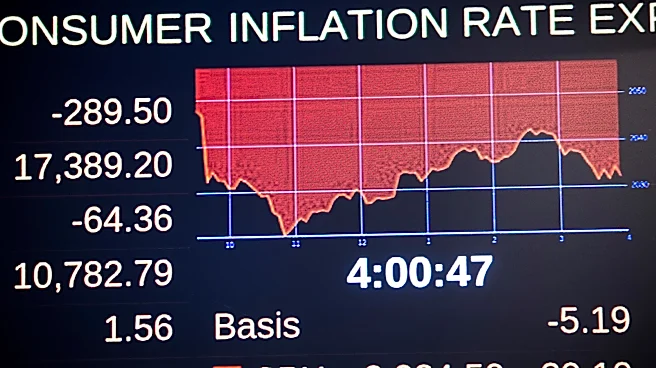
recent inflation data as "very noisy" and urged the Fed to adopt a forward-looking approach rather than reacting to past economic indicators. He highlighted that gasoline prices are currently below $4 a gallon, oil prices have dropped by $20, and diesel prices have decreased by approximately 10%. Bessent also predicted the release of a mild inflation report in the upcoming week, though he did not specify which report. His comments come as long bonds continued to fall, with the iShares 20+ Year Treasury Bond ETF (TLT) declining by 0.43% and the SPDR S&P 500 ETF Trust (SPY) slipping by 0.38%. The Fed's current rate range, set on September 17, 2026, remains at 3.75% to 4.00%.
Why It's Important?
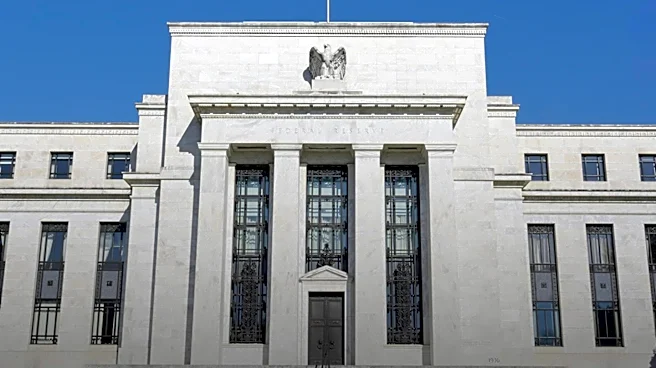
Secretary Bessent's remarks underscore a potential divergence in economic policy perspectives between the U.S. Treasury and the Federal Reserve. While Bessent advocates for restraint in monetary tightening due to easing energy costs, some Fed officials, like San Francisco Fed President Mary Daly, lean towards further rate hikes, citing persistent services inflation outside of housing. This difference in opinion could create uncertainty in financial markets, as investors weigh the implications of varying approaches to inflation management. If the Fed continues to raise rates despite the Treasury's advice, it could impact bond yields, stock market performance, and overall economic growth. The debate highlights the challenge of interpreting complex inflation data, where falling energy prices might mask underlying inflationary pressures in other sectors, particularly services.
What's Next?
The immediate focus will be on the upcoming inflation report, which Secretary Bessent anticipates will show mild inflation. This report could either support Bessent's call for Fed restraint or strengthen the case for further rate hikes by Fed officials. Financial markets will closely monitor any statements from Federal Reserve members for indications of their next policy moves. The ongoing discussion between the Treasury and the Fed regarding the appropriate monetary policy stance will likely continue, influencing investor sentiment and market trends. The performance of long bonds and broader equity markets will also serve as indicators of how investors are reacting to these differing economic outlooks and potential policy directions.
Beyond the Headlines
This situation highlights the inherent tension that can arise between fiscal and monetary policy objectives, especially during periods of economic uncertainty. The Treasury, focused on broader economic stability and growth, may prioritize avoiding excessive tightening that could stifle recovery. In contrast, the Federal Reserve, with its dual mandate of price stability and maximum employment, might prioritize controlling inflation even if it means higher interest rates. The interplay between these two powerful economic institutions is crucial for the nation's economic health. Furthermore, the debate over whether to react to past data or anticipate future trends in inflation reflects a fundamental challenge in economic forecasting and policy-making, with significant implications for businesses, consumers, and the global economy.