






What's Happening?
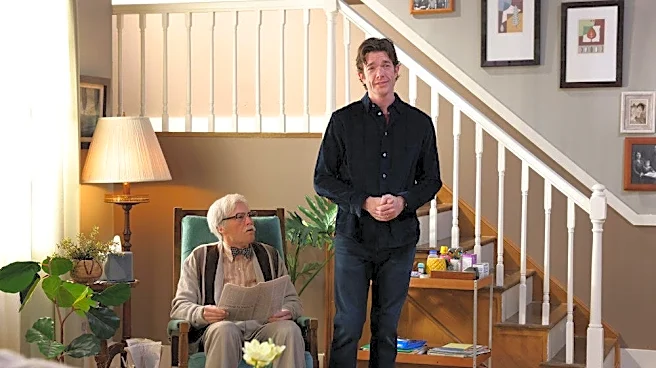
A recent 'Saturday Night Live' (SNL) skit titled 'Sister' has gone viral for humorously, yet poignantly, depicting the reality that daughters often bear a greater share of caregiving responsibilities for aging parents compared to sons. The sketch, featuring
John Mulaney, presents a fictional elder care service called 'Sister,' which is revealed to be the actual sister of the person seeking care. The skit showcases the son enjoying his life while his sister handles all the demanding aspects of elder care, including cleaning and personal assistance. This portrayal has resonated widely, with many viewers sharing it in family group chats and on social media platforms. Melinda French Gates also commented on the sketch, noting its accuracy and the underlying facts about women's disproportionate role in caregiving, as supported by research from Pivotal partners. The sketch has sparked numerous conversations about family dynamics and the unequal distribution of caregiving duties.
Why It's Important?
The 'Sister' skit is important because it brings a widely experienced, yet often unacknowledged, societal issue into mainstream discussion through comedy. It highlights the significant emotional, physical, and financial toll placed on women, particularly daughters, who frequently become primary caregivers for elderly parents. This unequal burden can lead to career interruptions, financial strain, and increased stress, anxiety, and depression for female caregivers. The viral nature of the skit and the strong reactions it has elicited underscore a collective recognition of this problem. By satirizing the situation, SNL has provided a platform for individuals to discuss these sensitive family dynamics, potentially leading to greater awareness and a re-evaluation of caregiving roles within families. The sketch also implicitly points to the broader lack of a national elder care program in the U.S., which often leaves families to navigate these challenges on their own.
What's Next?
The widespread discussion generated by the 'Sister' skit may lead to increased family conversations about caregiving responsibilities, potentially prompting some families to re-evaluate and redistribute these duties more equitably. As seen in various online reactions, some individuals have used the skit as a catalyst to initiate difficult but necessary discussions with their siblings about shared care. Psychologists have noted that the humor in the sketch has given women 'permission to laugh at something that is often deeply frustrating,' which could empower them to advocate for more balanced contributions. While a single skit is unlikely to bring about immediate policy changes, the heightened public awareness could contribute to broader societal pressure for improved elder care support systems and more equitable family caregiving models. Continued dialogue on this topic may also influence future media portrayals and public discourse around gender roles in caregiving.
Beyond the Headlines
Beyond its immediate comedic impact, the 'Sister' skit touches upon deeper ethical and cultural dimensions of family responsibility and gender roles in American society. It exposes the implicit societal expectation that women will naturally assume caregiving roles, often at the expense of their personal and professional lives. This expectation is rooted in historical gender norms that assign women primary responsibility for domestic and care work. The skit also highlights the 'caregiver crisis' in the U.S., driven by an aging population and insufficient national support for elder care. The emotional responses to the skit, ranging from laughter to profound pain, reveal the deep-seated resentment and frustration many women feel when their contributions are taken for granted or ignored. This cultural moment could contribute to a long-term shift in how caregiving is perceived and valued, potentially fostering a more equitable distribution of labor and greater recognition for caregivers.