

What's Happening?
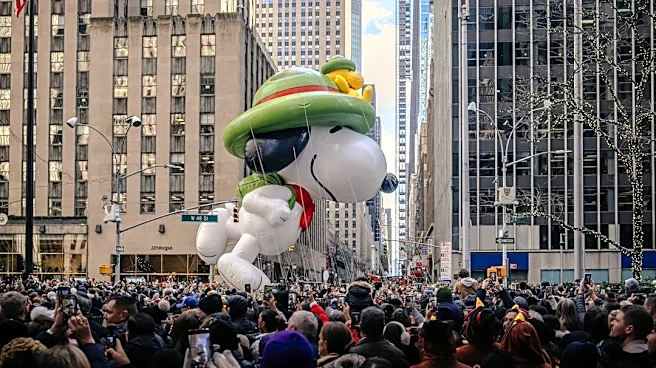
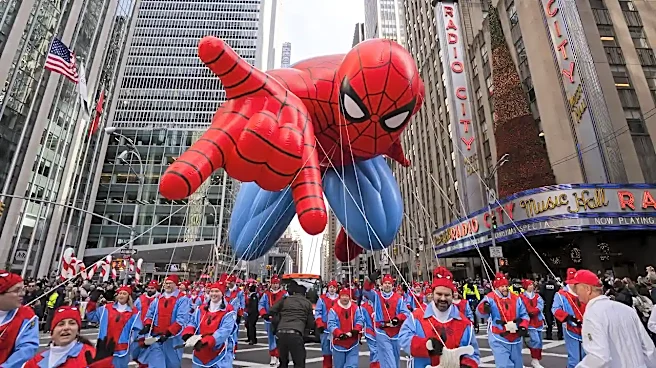
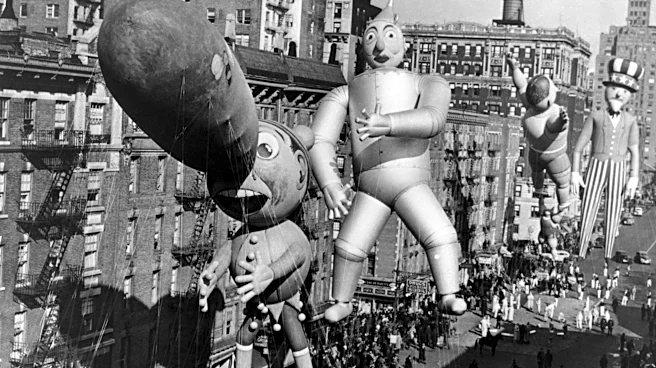
The Macy's Thanksgiving Day Parade has a rich history of contending with diverse weather conditions over its 100 years. From near-summer warmth to heavy snow, soaking rain, and strong winds, Mother Nature has presented numerous challenges, yet the parade
has never been canceled. Notable weather events include the warmest parade in 1933 with temperatures reaching 69 degrees, the first major snowstorm in 1938 dropping 3.9 inches of snow, and the only instance of all giant balloons being grounded in 1971 due to rain and fierce wind gusts. The 1989 parade saw the snowiest conditions on record with 4.4 inches of snow, while 1997 experienced a 'wind crisis' with 43 mph gusts causing balloon incidents, leading to stricter safety rules. The 2006 parade was the rainiest on record, and 2018 was the coldest, with temperatures plummeting to 17 degrees.
Why It's Important?
The weather history of the Macy's Thanksgiving Day Parade is important as it highlights the resilience and adaptability of one of America's most iconic holiday traditions. The continuous operation of the parade despite extreme weather conditions underscores its cultural significance and the dedication of its organizers and participants. The 1997 wind crisis, in particular, led to crucial safety advancements, including caps on balloon sizes, the introduction of rolling anchor vehicles, and strict wind speed thresholds for balloon operation. These measures have ensured the safety of both paraders and spectators, allowing the tradition to continue safely. The parade's ability to persist through various weather challenges also reflects a broader American spirit of perseverance and the importance of shared public celebrations, even in the face of environmental obstacles. It also serves as a testament to the meticulous planning and logistical efforts required for such a large-scale event.
What's Next?
As Macy's prepares for its 100th Thanksgiving Day Parade, weather will undoubtedly remain a critical factor in its execution. Forecasters will closely monitor conditions leading up to the event, with the latest outlook suggesting another potentially cold, wet morning in Manhattan. Organizers will continue to adhere to the established safety protocols, especially regarding wind speeds, to ensure the safe flight of the giant balloons. Spectators planning to attend will need to prepare for potentially challenging weather, bundling up for cold temperatures or bringing rain gear. The Weather Channel will provide ongoing updates and forecasts for the parade. The continuous adaptation to weather conditions ensures that the parade remains a beloved and safe annual event, with each year's weather adding another chapter to its storied history.
Beyond the Headlines
The enduring narrative of the Macy's Thanksgiving Day Parade battling the elements offers a deeper insight into the human relationship with tradition and nature. The parade's consistent triumph over adverse weather symbolizes a collective determination to uphold cultural rituals, even when faced with unpredictable natural forces. It also showcases the evolution of event management and public safety, demonstrating how past incidents can drive innovation and create more robust systems. The weather itself becomes an integral part of the parade's story, adding to its lore and the shared memories of generations of viewers. This interplay between human endeavor and natural phenomena underscores the idea that some traditions are so deeply ingrained in the cultural fabric that they become almost unstoppable, adapting and evolving rather than succumbing to external pressures. It's a powerful reminder of the resilience of shared cultural experiences.