


What's Happening?
The second edition of Design Doha, scheduled for 2026, will showcase five winning spatial installations as part of its Public Design Commissions program. These installations, curated by Javier Peña Ibáñez, are research-based explorations that draw on regional
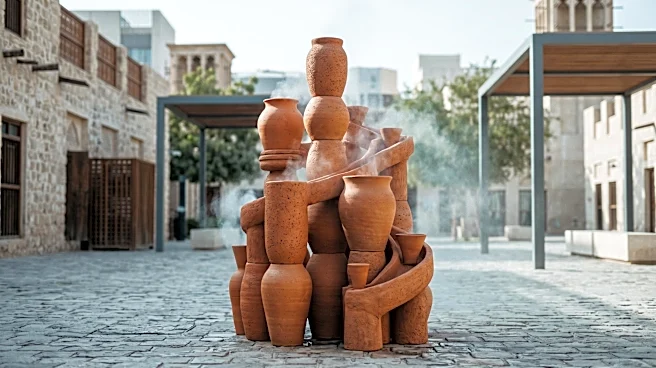
approaches to water, materials, craft, climate, and the built environment. The biennial event, taking place in the historic neighborhood of Fereej Al Asmakh, will feature over 20 exhibitions and more than 300 multidisciplinary designers and studios. Meriem Chabani's 'Salsabil' installation utilizes ceramic craftsmanship and passive cooling techniques with contemporary urban misting to create cooler public spaces. Haitam Daoudi and Oscar Cruz's 'Cooling Pots' adapt traditional earthenware vessels for passive cooling. Platau's 'Shoreline' reinterprets Doha's maritime heritage through a playful urban shelter. Studio By Three's 'Falajscape' uses ancient irrigation principles for a public water feature, and Abdalla Almulla's 'Palm Construct' transforms date palm into a building material for a sheltered pavilion.
Why It's Important?
These installations highlight the growing global focus on sustainable design and the reinterpretation of traditional knowledge to address contemporary challenges, particularly in regions facing significant climate impacts. The projects demonstrate how ancient techniques and local materials can be integrated with modern design to create functional and aesthetically pleasing urban solutions. For the U.S., this trend underscores the potential for similar approaches in urban planning and architecture, especially in areas grappling with extreme weather conditions or seeking to preserve cultural heritage through design. The emphasis on creating comfortable public spaces and utilizing sustainable resources could influence future design philosophies and material innovation, fostering a dialogue between historical practices and modern environmental needs.
What's Next?
The Design Doha 2026 event will continue to showcase these innovative installations until January 31, 2027. The success and public reception of these commissions could lead to their permanent integration into urban landscapes or inspire similar projects in other cities globally. The ongoing dialogue between traditional craftsmanship and contemporary design, as exemplified by these works, is likely to influence future architectural and urban planning initiatives. Furthermore, the focus on climate-adaptive solutions may encourage further research and development in sustainable building materials and passive cooling technologies, potentially leading to broader adoption in urban development projects worldwide.
Beyond the Headlines
The installations at Design Doha 2026 delve into the deeper implications of cultural heritage and environmental adaptation. They challenge the notion that modern problems require exclusively modern solutions, instead advocating for a synthesis of ancestral knowledge and contemporary technology. This approach has ethical dimensions, as it respects and revitalizes traditional crafts and materials, ensuring their relevance in a rapidly changing world. Legally, such projects might influence building codes and urban development policies to prioritize sustainable and culturally sensitive designs. Culturally, they foster a sense of place and identity by connecting urban residents with their historical roots and natural environment, promoting community engagement and a more harmonious relationship between humans and their surroundings.