





What's Happening?
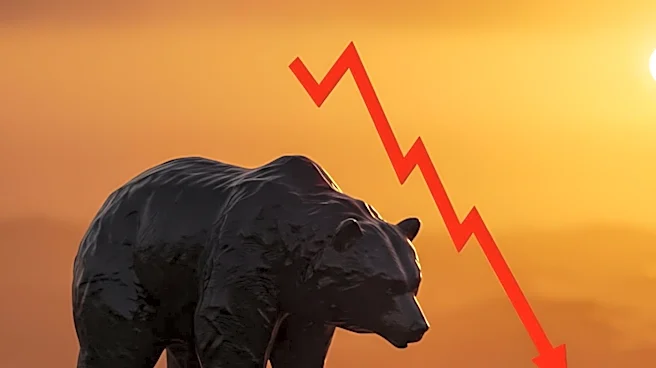
The price of Azerbaijani Azeri Light crude oil has experienced a decline on the global market, falling below $101 per barrel. According to APA-Economics, the price decreased by $6.56, or 6.10%, to reach $100.90 per barrel. This marks a notable drop from
its previous trading price of $107.46 per barrel. The Azerbaijani state budget for 2026 was formulated based on an average oil price of $65 per barrel, indicating that despite the recent decline, the current market price remains significantly above the budgetary projection.
Why It's Important?
The fluctuation in global oil prices, particularly for a key crude like Azerbaijani Azeri Light, has significant implications for oil-producing nations and the global energy market. For Azerbaijan, a substantial portion of its national revenue is derived from oil exports. While the current price of $100.90 per barrel is still well above the $65 per barrel benchmark used for the 2026 state budget, any sustained downward trend could impact future revenue projections and fiscal planning. A decline in oil prices can affect government spending, investment in other sectors, and the overall economic stability of oil-dependent economies. Globally, changes in crude oil prices influence fuel costs for consumers, operational expenses for industries, and can contribute to inflationary or deflationary pressures. This specific decline, while not drastic, signals ongoing volatility in the international oil market, driven by various supply and demand factors.
What's Next?
The trajectory of Azerbaijani oil prices will continue to be influenced by global supply and demand dynamics, geopolitical events, and decisions by major oil-producing organizations like OPEC+. Market analysts will closely monitor factors such as global economic growth forecasts, inventory levels, and any potential disruptions to oil production or transportation. For Azerbaijan, the government will likely continue to monitor these price movements to assess their impact on the national budget and adjust economic policies as needed. While the current price remains favorable compared to budgetary assumptions, sustained volatility could prompt a re-evaluation of long-term economic strategies and diversification efforts to reduce reliance on oil revenues. The energy sector will remain a key focus for both domestic policy and international trade relations.
Beyond the Headlines
The movement of oil prices often reflects a complex interplay of economic and geopolitical forces. Beyond the immediate financial impact, a decline in oil prices can signal broader shifts in global energy consumption patterns or increased supply from other regions. It can also influence the competitiveness of different energy sources, potentially accelerating or decelerating the transition to renewable energy. For countries like Azerbaijan, which are heavily reliant on hydrocarbon exports, these price fluctuations underscore the long-term challenge of economic diversification. While high oil prices provide immediate revenue, they can also disincentivize investment in non-oil sectors. Conversely, price declines can act as a catalyst for governments to pursue economic reforms and foster growth in other industries, aiming for greater resilience against commodity market volatility. This particular price movement, therefore, is a small indicator within a much larger narrative of global energy transition and economic adaptation.