






What's Happening?
Soybean futures experienced a decline on Tuesday morning, with contracts dropping by 7 to 10 cents. This follows a period of firming on Monday, where contracts had settled 3 to 7 ½ cents higher. The open interest in soybean futures decreased by 6,470
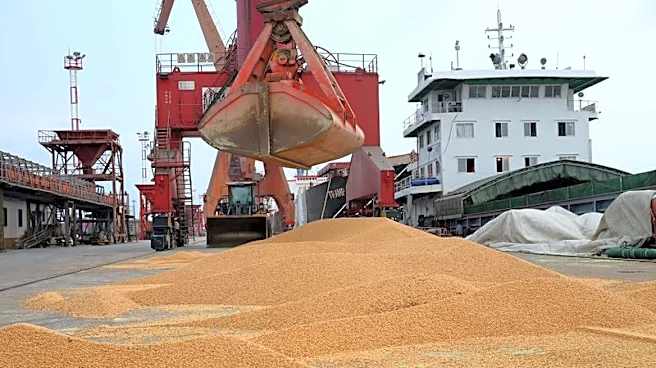
contracts, indicating some short covering activity. The national average cash price for soybeans rose by 6 cents to $11.47 ½. Meanwhile, soymeal futures saw a slight increase, and soy oil prices rose by 101 to 157 points. The USDA's weekly crop progress report indicated that 88% of the U.S. soybean crop was blooming, with 62% setting pods, which is 7 percentage points faster than the five-year average. However, condition ratings remained steady at 63% good/excellent. Export shipments for the week ending July 30 were reported at 343,941 metric tons, a 6% decrease from the previous week and 45.3% lower than the same week last year. Notably, China purchased a significant amount of U.S. soybeans, with 488,000 metric tons confirmed for the 2026/27 marketing year.
Why It's Important?
The decline in soybean prices reflects broader market uncertainties and challenges in the agricultural sector. The decrease in export shipments, particularly to key markets like China, highlights ongoing trade tensions and competition from other soybean-producing countries. The steady condition ratings of the U.S. soybean crop suggest stable domestic production, but the export challenges could impact overall market dynamics. The significant purchase by China indicates potential shifts in trade patterns, which could influence future pricing and demand. Additionally, the USDA's data on soybean crushing and oil stocks provide insights into domestic processing trends, which are crucial for understanding supply chain dynamics.
What's Next?
Looking ahead, market participants will closely monitor further developments in U.S.-China trade relations, as these could significantly impact soybean exports and pricing. The USDA's upcoming reports on crop progress and export sales will provide additional insights into market trends. Traders and analysts will also watch for any changes in global production forecasts, particularly from major competitors like Brazil, which could affect U.S. market share. The ongoing assessment of crop conditions and export demand will be critical in shaping future market strategies and pricing decisions.