
What's Happening?
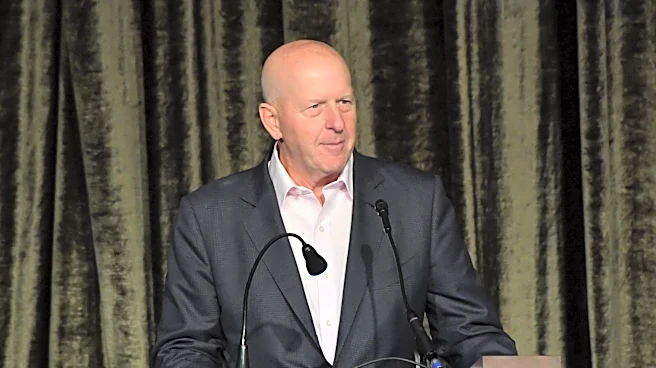
Goldman Sachs CEO David Solomon recently spoke at the TomorrowX Summit, a conference held at the Moody Center aimed at democratizing access for investors. During his address, Solomon highlighted the significant
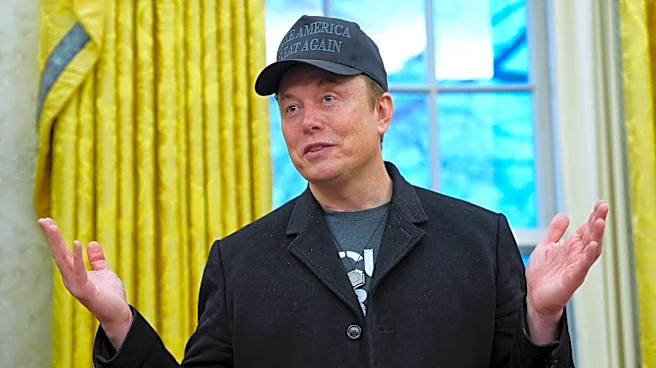
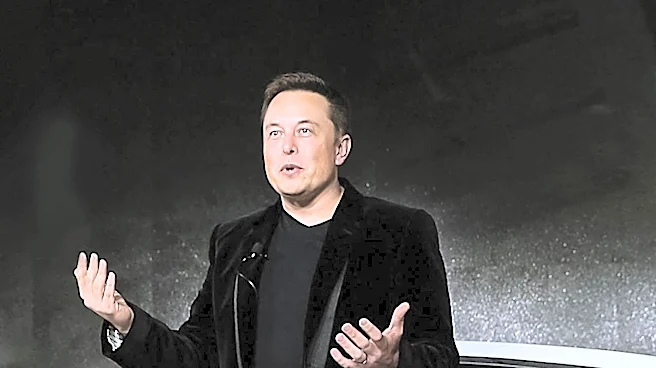
benefits that artificial intelligence (AI) could bring to Americans. He specifically emphasized AI's potential to advance medical research and reduce the barriers to entry for entrepreneurship. Solomon stated that the cost of starting a small business and pursuing entrepreneurial ideas has decreased, suggesting that AI will be a powerful tool over the next decade if properly utilized. The summit, which took place from November 17-18, also featured other prominent figures such as SpaceX and Tesla CEO Elon Musk and Dell Technologies CEO Michael Dell, discussing various aspects of technology access and investing.
Why It's Important?
Solomon's remarks underscore a growing sentiment among financial and tech leaders regarding the transformative potential of AI. His focus on medical research suggests a future where AI could accelerate drug discovery, improve diagnostic accuracy, and personalize treatments, potentially leading to significant advancements in public health and a reduction in healthcare costs. Furthermore, his emphasis on lowering entrepreneurial barriers through AI could foster a new wave of innovation and job creation, particularly for small and medium-sized enterprises. This could democratize economic opportunities, allowing more individuals to participate in the economy and potentially reducing wealth disparities. The integration of AI into these sectors could reshape the U.S. economy, driving productivity and competitiveness on a global scale.
What's Next?
The continued integration of AI into medical research and entrepreneurial ecosystems is expected to gain momentum. Investment in AI-driven healthcare solutions and startup incubators leveraging AI tools will likely increase. Policymakers may also begin to explore regulatory frameworks that support AI innovation while addressing ethical concerns and ensuring equitable access to these technologies. The discussions at events like the TomorrowX Summit are likely to influence investment strategies and corporate priorities, pushing companies to further explore and implement AI solutions. The coming decade will likely see a significant shift in how businesses operate and how medical advancements are achieved, with AI playing a central role.
Beyond the Headlines
Beyond the immediate economic and scientific implications, Solomon's vision for AI touches upon broader societal shifts. The democratization of entrepreneurship through AI could challenge traditional corporate structures and foster a more agile, innovation-driven economy. However, it also raises questions about the future of work, the need for reskilling the workforce, and the potential for increased automation to displace certain jobs. In medical research, while AI promises breakthroughs, it also necessitates careful consideration of data privacy, algorithmic bias, and the ethical implications of AI-driven diagnostics and treatments. The long-term impact will depend on how effectively these challenges are managed alongside the pursuit of technological advancement.