







What's Happening?
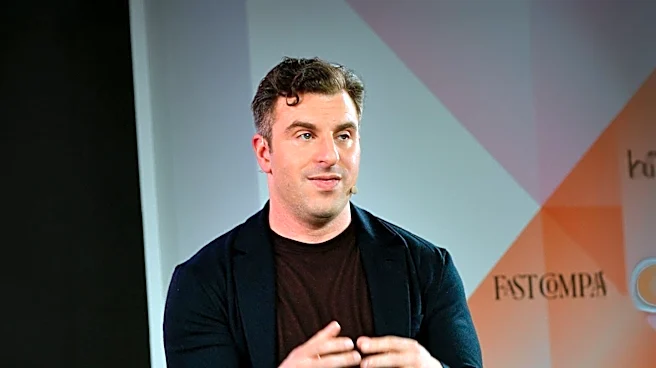
Brian Chesky, the founder and CEO of Airbnb, is actively employing a management philosophy he terms 'founder mode.' This approach involves a hands-on leadership style, minimizing recurring meetings, and directly engaging with organizational details. This strategy
is being implemented as Airbnb significantly expands its operations, particularly by venturing into the hotel market. Initially, Airbnb's mission was to offer local, authentic experiences as an alternative to traditional hotels, with its early tagline being 'forget hotels.' However, Chesky's perspective has evolved, and the company now views hotels as a substantial growth opportunity. Airbnb has begun booking hotels, including boutique and independent properties, and is strategically scaling this business segment by hiring new teams and looking beyond just boutique offerings. This shift marks a significant departure from the company's original stance, where hotels were once considered a 'natural enemy.'
Why It's Important?
Airbnb's strategic pivot into the hotel sector carries significant implications for both the company and the broader hospitality industry in the U.S. For Airbnb, this expansion represents a multi-billion-dollar opportunity, as hotel nights booked have grown approximately three times faster than its traditional homes business in recent quarters. This move could diversify Airbnb's revenue streams and attract new customer segments, with about 35% of guests who first book a hotel on Airbnb returning to book a home stay within a year. For the U.S. hospitality market, this means increased competition for established hotel chains and potentially a blurring of lines between traditional lodging and alternative accommodations. While some might view this as a contradiction to Airbnb's original ethos, Chesky sees it as a necessary evolution for growth, indicating a mature company's willingness to adapt its core business model to capitalize on market opportunities. This could lead to innovative service offerings and competitive pricing across the entire travel accommodation landscape.
What's Next?
Airbnb is actively scaling its hotel business, which includes hiring new teams with expertise in the hotel industry and forging partnerships, such as the recent agreement with Lark Hotels to list over 75 properties. This indicates a continued aggressive push into the hotel market, potentially leading to more collaborations with various hotel groups, including those beyond boutique properties. The company will likely focus on integrating these new hotel offerings seamlessly into its platform while managing any potential concerns from its existing home hosts about increased competition. Future earnings calls and investor presentations will likely highlight the growth metrics of the hotel segment and provide further insights into Airbnb's long-term strategy for this expansion. The success of this venture could influence other short-term rental platforms to consider similar diversification strategies, further reshaping the U.S. travel and accommodation industry.
Beyond the Headlines
The shift in Airbnb's strategy, from shunning hotels to actively embracing them, reflects a broader trend in the tech industry where companies, once disruptive, eventually integrate with or acquire elements of the traditional sectors they initially aimed to displace. This evolution raises questions about the long-term identity of 'sharing economy' platforms and their commitment to their founding principles. Chesky's 'founder mode' management style, while emphasizing hands-on leadership, also suggests a centralized decision-making process that could be crucial for navigating such a significant strategic pivot. The move also highlights the increasing convergence of different segments within the travel industry, potentially leading to a more consolidated and integrated market where consumers have a wider range of accommodation options available on a single platform. This could also spark discussions about regulatory frameworks that may need to adapt to these evolving business models, ensuring fair competition and consumer protection across both traditional and new accommodation types.