






What's Happening?
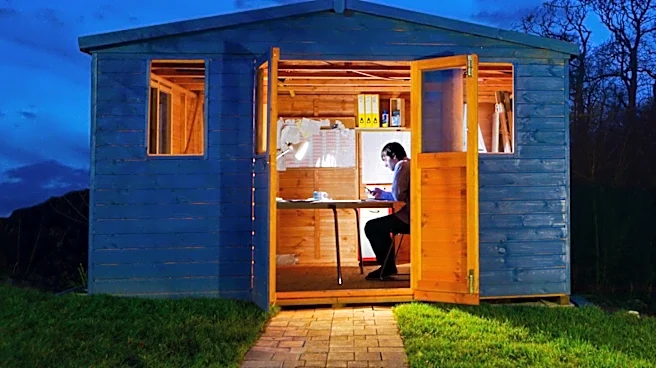
Freedom Room has published a guide on designing a 12x8 backyard office, addressing the increasing need for dedicated workspaces for remote employees. The article emphasizes that even a compact 96-square-foot structure can significantly improve work-from-home
experiences by providing a separate, quiet environment. Key considerations for designing such a space include smart layouts to maximize functionality, proper insulation and weatherproofing, and reliable electrical and internet wiring. The guide also highlights the importance of HVAC and climate control, ergonomic furniture selection for small spaces, and strategic window placement for natural lighting while minimizing screen glare. Additionally, soundproofing is recommended to reduce external distractions, and vertical storage solutions are suggested to keep the workspace organized and clutter-free.
Why It's Important?
The proliferation of remote work in the U.S. has created a significant demand for dedicated home office spaces, leading many to consider backyard offices. This trend impacts the construction and home improvement industries, as well as the market for office furniture and technology. For individuals, a well-designed backyard office can enhance productivity, improve work-life separation, and potentially increase property value. It offers a solution to the challenges of working in shared living spaces, such as distractions and lack of privacy. However, the investment in a backyard office also involves considerations like local zoning regulations, permit requirements, and the overall cost-benefit analysis, which can be substantial. The guide helps potential buyers navigate these complexities, ensuring a functional and comfortable workspace.
What's Next?
As remote work continues to be a prevalent model, the market for backyard office solutions is expected to expand, with companies like Freedom Room likely offering more diverse designs and customizable options. There may be an increase in demand for prefabricated kits and professional installation services, alongside a growing focus on sustainable and energy-efficient building materials. Local governments might also adapt zoning laws and permit processes to accommodate the rising popularity of detached home offices. Furthermore, advancements in smart home technology could integrate seamlessly into these structures, offering enhanced climate control, security, and connectivity. The emphasis will remain on creating highly functional, comfortable, and aesthetically pleasing outdoor workspaces.
Beyond the Headlines
The trend of backyard offices signifies a deeper societal shift towards decentralization of work and a re-evaluation of traditional office environments. This movement could have long-term implications for urban planning, reducing daily commutes and potentially alleviating traffic congestion in metropolitan areas. It also raises questions about the future of commercial real estate and the potential for more mixed-use developments that integrate residential and small-scale commercial spaces. On a personal level, having a separate backyard office can foster a stronger sense of work-life balance by physically separating the professional sphere from the domestic one, even if both are on the same property. This physical boundary can be crucial for mental well-being and productivity in a remote work setting.