










What's Happening?
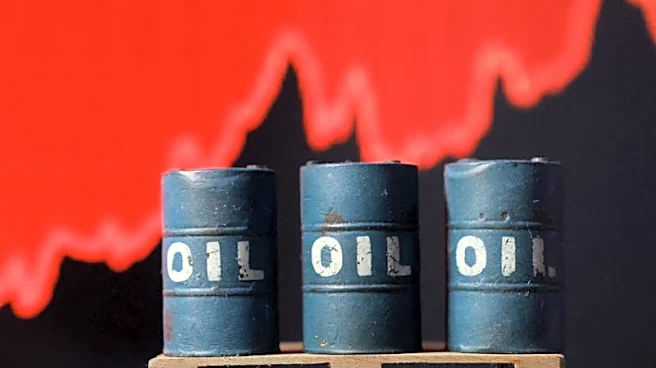
The Dangote Petroleum Refinery has clarified why domestic fuel prices in Nigeria do not immediately decrease in response to falling global crude oil prices. The refinery revealed that it spent $4.48 billion importing 40.4 million barrels of crude oil in May
and June 2026 under supply contracts signed before current market prices took effect. The refinery's pricing strategy involves purchasing crude weeks or months in advance, based on monthly average prices rather than daily spot market rates. This approach means that current fuel prices reflect earlier, higher crude costs, despite recent declines in global oil prices.
Why It's Important?
This explanation provides insight into the operational economics of Africa's largest refinery and highlights the complexities of fuel pricing in Nigeria. By absorbing some of the higher crude procurement costs, the refinery aims to cushion inflationary pressures and stabilize prices in Nigeria's downstream market. This strategy is crucial for maintaining energy security and reducing reliance on imported petroleum products, which can strain Nigeria's foreign exchange reserves. The refinery's approach also underscores the challenges of aligning domestic fuel prices with volatile international oil markets.
What's Next?
If international crude prices remain favorable, Nigerians could see further moderation in fuel prices as the refinery processes cheaper crude inventories. The refinery's diversified sourcing strategy, including recent imports from the United Arab Emirates, positions it to adapt to evolving global supply patterns. This flexibility could enhance the refinery's ability to manage costs and stabilize fuel prices in the future. Stakeholders will be monitoring global oil price trends and the refinery's procurement strategies to assess their impact on Nigeria's fuel market.