






What's Happening?
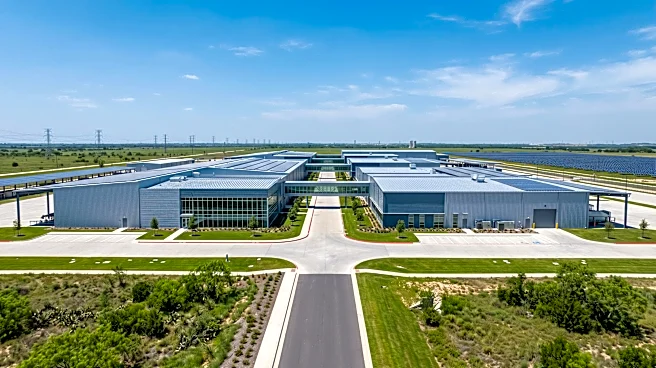
SEG Solar, a Houston-based manufacturer, has secured land for a proposed $950 million solar cell manufacturing facility near Houston, Texas. This investment is a significant step in the company's strategy to establish a vertically integrated U.S. solar supply
chain, driven by increasing demand for domestically produced energy equipment. The facility, to be developed at its Tomball Industrial Campus, is designed to produce 4 gigawatts of heterojunction (HJT) solar cells annually. This expansion is expected to create over 700 jobs, with production slated to begin in two phases in 2028 and 2029. The new cell manufacturing plant will be adjacent to SEG Solar's existing and under-construction module manufacturing facilities, aiming to consolidate solar cell, module, and key component production in one location.
Why It's Important?
This substantial investment by SEG Solar is crucial for strengthening the U.S. domestic solar manufacturing capacity and reducing reliance on imported components. For U.S. solar developers, domestically manufactured cells and modules can help meet domestic content requirements and qualify for certain incentives, improving project economics and supply chain transparency. The creation of over 700 jobs directly supports the U.S. workforce and fosters economic growth in the clean energy sector. This move also addresses equipment sourcing risks and aligns with federal energy policies aimed at boosting domestic production. By integrating the supply chain, SEG Solar aims to offer a more dependable source of U.S.-manufactured solar products, which is vital for the nation's energy independence and security, particularly as the demand for clean energy continues to rise.
What's Next?
The project is currently in the planning stage, with SEG Solar having secured the land but not yet disclosing a construction start date or detailed financing arrangements. Future steps will involve monitoring construction milestones, securing customer commitments, and evaluating production costs and the company's ability to scale manufacturing competitively. The success of this facility will depend on various factors, including equipment costs, factory utilization, international competition, trade policies, and demand from U.S. solar developers. The distinction between solar cell and module capacity is important, as the 4 GW cell facility will supply components for finished panels rather than represent additional module production. This development is expected to encourage further investment in U.S. energy infrastructure, particularly in the domestic production of equipment needed for future electricity generation.
Beyond the Headlines
This investment by SEG Solar reflects a broader strategic imperative within the U.S. to re-shore critical manufacturing capabilities, particularly in sectors vital for national security and economic competitiveness, such as clean energy. The emphasis on a vertically integrated supply chain not only enhances efficiency and reduces logistical complexities but also provides greater control over product quality and intellectual property. This trend could lead to a more resilient U.S. industrial base, less susceptible to global supply chain disruptions. Furthermore, the adoption of advanced heterojunction technology (HJT) signifies a commitment to innovation and higher efficiency in solar energy production, potentially setting new standards for the industry. This move could also spur further R&D and technological advancements within the U.S., positioning the country as a leader in next-generation solar technologies.