





What's Happening?
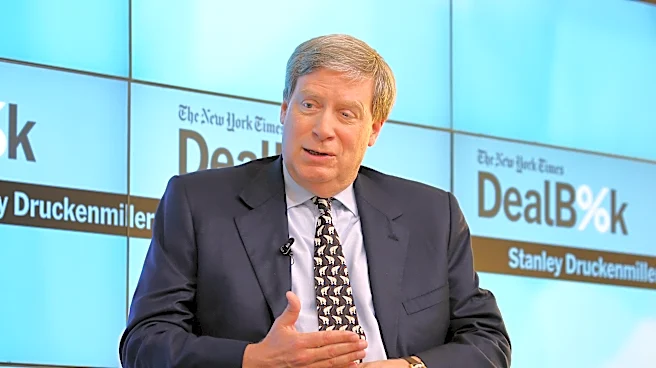
Billionaire investor Stanley Druckenmiller, who manages the Duquesne Family Office, made significant changes to his investment portfolio during the third quarter. According to recent 13F filings, Druckenmiller sold approximately 94% of his stake in Taiwan
Semiconductor (TSMC) and completely exited his position in Alphabet (GOOG, GOOGL). These sales are notable given that both companies are often associated with artificial intelligence (AI) investments. Concurrently, Druckenmiller substantially increased his holdings in Amazon (AMZN), elevating it from his ninth-largest position to his third-largest. Amazon's cloud computing division, Amazon Web Services (AWS), is a key contributor to its operating profit and has seen growth driven by increased AI usage. This strategic shift indicates a re-evaluation of his AI-related investments, moving away from chip manufacturers and search engine giants towards e-commerce and cloud service providers.
Why It's Important?
Druckenmiller's portfolio adjustments are significant for the broader market, particularly for investors tracking the movements of influential hedge fund managers. His decision to divest heavily from TSMC and entirely from Alphabet, both considered bellwethers in the AI sector, could signal a cautious outlook on certain segments of the AI market or a belief that their growth potential has been fully realized in the short term. Conversely, his increased investment in Amazon suggests a strong conviction in its long-term prospects, particularly its AWS division, which benefits from the ongoing expansion of cloud computing and AI infrastructure. This move could influence other institutional and retail investors to re-evaluate their own positions in these high-profile technology stocks, potentially leading to shifts in market sentiment and capital allocation within the tech and AI sectors.
What's Next?
The impact of Druckenmiller's Q3 moves may become clearer as Q4 market performance unfolds. Since the end of Q3, Amazon's stock has remained relatively flat, while Alphabet and TSMC have experienced declines of over 20% and 30% respectively. This suggests that Druckenmiller's divestments may have been prescient, anticipating a downturn in these specific stocks. Future 13F filings will reveal whether he has made further adjustments to his portfolio in Q4, especially concerning his remaining TSMC stake or any new positions. Investors will closely watch these developments to gauge his ongoing market outlook and potential shifts in investment strategies, particularly regarding the evolving landscape of AI and technology stocks. His actions could serve as an indicator for market trends and investor confidence in various tech segments.
Beyond the Headlines
Druckenmiller's trading activity highlights the dynamic and often unpredictable nature of high-stakes investing, even within rapidly growing sectors like AI. His previous pattern of selling and re-buying Alphabet shares suggests a tactical approach to market timing rather than a permanent bearish stance on the company itself. This emphasizes that even for seasoned investors, portfolio management is an ongoing process of adaptation to market conditions and perceived value. The broader implication is that while AI is a transformative technology, the investment landscape surrounding it is complex and subject to frequent re-evaluation by major players. This underscores the importance of fundamental analysis and strategic timing, even for companies at the forefront of technological innovation, and cautions against blindly following investment trends.