





What's Happening?
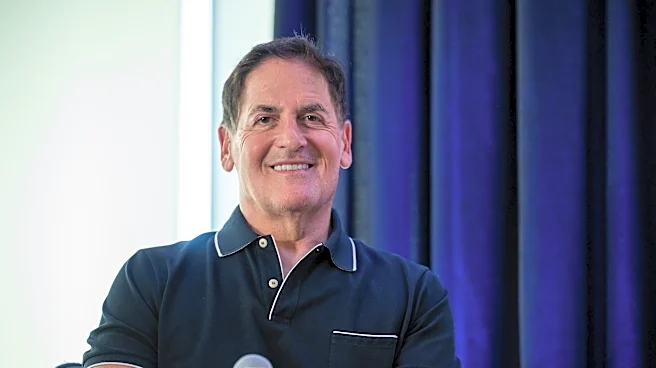
New Jersey is partnering with billionaire Mark Cuban on an initiative aimed at reducing prescription drug costs for public employees. Asbury Park Press reporter Michael L. Diamond discussed this development, highlighting the efforts of Governor Mikie
Sherrill and Cuban to target pharmacy benefit managers (PBMs). A newly formed state working group has been tasked with identifying cost-saving solutions. However, questions have arisen regarding the inclusion of OptumRx, the current pharmacy benefit manager, in this working group. The initiative seeks to curb the rising prices of prescription drugs, which have become a significant financial burden for both individuals and the state's budget. This collaboration signifies a direct challenge to the existing pharmaceutical supply chain and its pricing mechanisms.
Why It's Important?
This initiative is significant because it directly addresses the escalating cost of prescription drugs, a major concern for public employees and taxpayers in New Jersey. High drug costs impact the state budget, potentially leading to increased healthcare premiums or reduced benefits for public workers. By targeting pharmacy benefit managers, the state and Mark Cuban are aiming to disrupt a system often criticized for its lack of transparency and its role in inflating drug prices. Success in this endeavor could set a precedent for other states and potentially influence national discussions on drug pricing reform. The inclusion of OptumRx in the working group, while controversial, could either provide valuable insights or present a conflict of interest, making the group's findings and recommendations crucial for future policy decisions.
What's Next?
The newly formed state working group will proceed with its mandate to investigate and propose solutions for reducing prescription drug costs. Their findings and recommendations will be critical in shaping New Jersey's future approach to pharmaceutical procurement and management for public employees. Potential outcomes could include negotiating new contracts with PBMs, exploring direct purchasing models, or implementing more transparent pricing structures. The involvement of Mark Cuban's cost-plus drug company could also lead to innovative partnerships or alternative supply chain models. The public and stakeholders will be closely watching the working group's progress, especially concerning how it addresses the role of current PBMs and whether it can deliver tangible cost savings for New Jersey's public employees.
Beyond the Headlines
This collaboration between New Jersey and Mark Cuban extends beyond immediate cost savings, touching upon broader issues of healthcare affordability and market transparency. It highlights a growing trend of states and private entities seeking innovative solutions to systemic problems in the healthcare industry, particularly in pharmaceutical pricing. The initiative could expose inefficiencies and opaque practices within the PBM industry, potentially leading to increased regulatory scrutiny and calls for greater accountability. Furthermore, if successful, it could empower other states to adopt similar strategies, fostering a more competitive and consumer-friendly pharmaceutical market. This effort represents a significant step towards challenging the status quo and advocating for more equitable access to affordable medications, potentially influencing national healthcare policy debates.