





What's Happening?
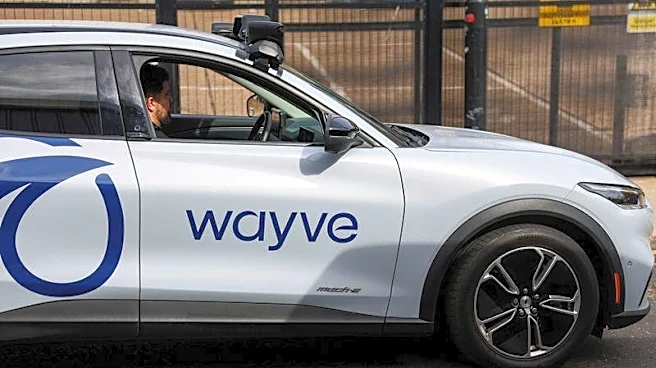
Stellantis, a global automaker, has partnered with British startup Wayve to integrate Wayve's artificial intelligence-based driving software into its STLA AutoDrive platform. This collaboration aims to reduce development time and costs for advanced driver-assistance
systems (ADAS). The initial product launch under this partnership is targeted for 2028 in North America. Stellantis CEO Antonio Filosa emphasized that large-scale deployment is crucial for lowering the cost of hands-free driving and accelerating consumer adoption. The partnership specifically targets Level 2++ driving assistance, which allows for hands-off driving but still requires active driver oversight. Wayve's technology is designed for multi-brand use, and Stellantis' diverse brand portfolio, including Jeep, Fiat, Peugeot, and Maserati, will allow for tuning autonomous driving features across different models while utilizing a shared AI core. The companies recently demonstrated hands-free driving capabilities in development versions of the Fiat 500e and Maserati Grecale in Turin, building on previous demonstrations with a Jeep Grand Cherokee.
Why It's Important?
This partnership signifies a strategic shift in the automotive industry's approach to autonomous driving technology. Historically, many legacy car manufacturers attempted to develop sophisticated self-driving capabilities independently. However, rising project costs and extended payback periods have led these companies to increasingly seek support from specialized technology firms like Wayve. For Stellantis, this collaboration is critical for accelerating its entry into the advanced driver-assistance market, particularly in North America, and for making these technologies more affordable and accessible to consumers. By leveraging Wayve's AI expertise, Stellantis can potentially gain a competitive edge in a rapidly evolving sector. The focus on Level 2++ driving assistance indicates a pragmatic approach to commercialization, balancing advanced features with the current regulatory landscape and consumer readiness. The ability to adapt Wayve's AI core across Stellantis' diverse brand portfolio could also lead to significant economies of scale and a more unified user experience across different vehicle types.
What's Next?
The immediate next step for Stellantis and Wayve is the continued development and refinement of the AI-powered driving software for the STLA AutoDrive platform. The target for the initial product launch is 2028 in North America, indicating a focused effort to meet this timeline. As European regulators are still working to align approval standards for advanced assisted-driving technologies, the North American market will likely serve as a crucial proving ground for this collaboration. Further demonstrations and testing of the technology in various Stellantis models are expected. The success of this partnership could influence other automakers to pursue similar collaborations with AI technology firms, potentially accelerating the broader adoption of advanced driver-assistance systems across the industry. Consumers can anticipate more affordable and widely available hands-free driving features in Stellantis vehicles in the coming years, starting with the North American market.
Beyond the Headlines
This collaboration highlights a broader trend in the automotive industry: the increasing reliance on external technology partners for specialized software development. As vehicles become more software-defined, traditional automakers are recognizing the need to integrate cutting-edge AI and software solutions from companies that specialize in these areas. This shift could lead to a more modular and collaborative ecosystem for vehicle development, where different companies contribute their expertise to create advanced features. Ethically, the deployment of Level 2++ systems, which require driver oversight despite offering hands-free capabilities, raises questions about driver responsibility and the transition towards fully autonomous vehicles. The ability to tune AI behavior across different brands also presents an interesting challenge in maintaining brand identity while leveraging a shared technological core. This partnership could set a precedent for how established automakers and innovative tech startups can effectively collaborate to bring complex, safety-critical technologies to market.