







What's Happening?
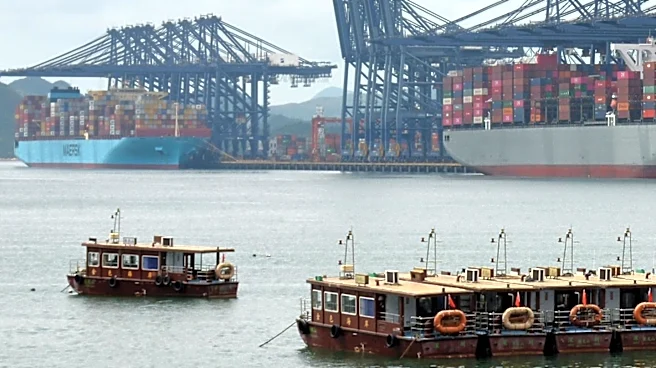
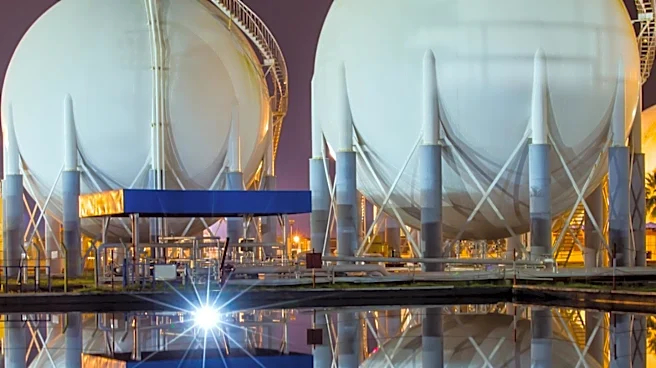
According to a study by S&P Global Energy, liquefied natural gas (LNG) is set to become the United States' second-largest net export industry within the next five years. The report highlights that the US achieved a milestone in 2025 by exporting over
100 million tons of LNG in a single year, facilitated by the establishment of new production plants. The study forecasts that total investments in the US LNG supply chain will surpass $1 trillion by 2040, following the lifting of an export pause last year. The anticipated economic impact includes $2.9 trillion in revenue, $206 billion in taxes, and nearly $630 billion in labor income. The report also predicts a 1.6% increase in domestic household gas costs between 2026 and 2031, with feedgas demand expected to double to 36 billion cubic feet per day by 2031.
Why It's Important?
The expansion of LNG exports is poised to significantly impact the US economy, contributing nearly $1.4 trillion to the GDP by 2040. This growth positions the US as a major player in the global LNG market, potentially accounting for a third of the market share within five years. The increased export capacity could stabilize domestic markets during peak demand periods, although infrastructure constraints may continue to drive regional price volatility. The economic benefits extend beyond direct revenue, as the industry is expected to generate substantial tax income and labor opportunities, bolstering economic growth and employment.
What's Next?
As the US continues to expand its LNG export capacity, stakeholders will likely focus on addressing infrastructure constraints to mitigate regional price volatility. The potential for increased global market share may prompt further investments in production and export facilities. Additionally, the anticipated rise in domestic gas costs could lead to policy discussions on balancing export growth with consumer energy affordability. The international market may also react to the US's growing influence, particularly in Europe and Asia, where prices could surge if US export capacity is not realized.