








What's Happening?
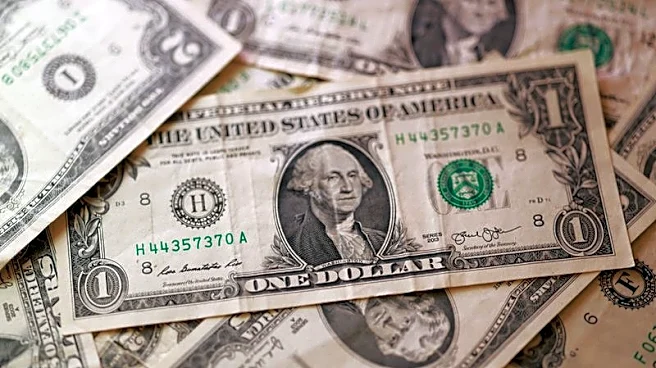
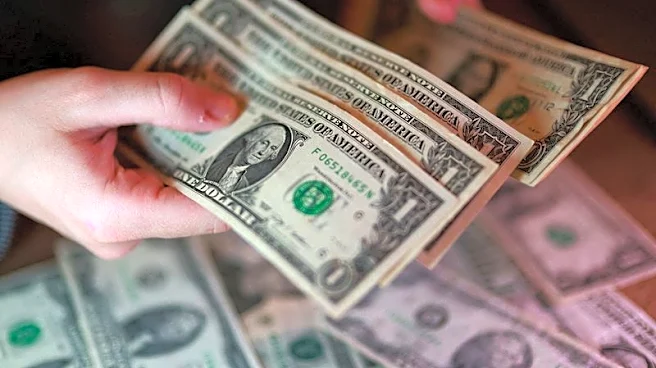
The U.S. dollar has surged to its highest level in 13 months against the euro, driven by expectations of a strong U.S. economy and potential interest rate hikes by the Federal Reserve. This increase has also affected other currencies, with the British
pound reaching a seven-month low and the Japanese yen nearing its weakest point in four decades. The dollar's strength has pushed gold prices below $4,000 an ounce for the first time in over seven months and briefly sent Bitcoin under $60,000. Traders are now anticipating a possible rate hike by the Federal Reserve as early as October, with a 50/50 chance of a second hike by the end of the year. This speculation is based on the Federal Reserve's recent tough stance on inflation, as indicated by the personal consumption expenditures price index showing a 3.4% annual rate, the highest since 2023.
Why It's Important?
The strengthening of the U.S. dollar has significant implications for global markets and economies. A stronger dollar can make U.S. exports more expensive and imports cheaper, potentially affecting trade balances. It also impacts commodity prices, as seen with the decline in gold and Bitcoin prices. For investors, the anticipation of interest rate hikes by the Federal Reserve suggests a tightening of monetary policy, which could influence investment strategies and capital flows. Additionally, the potential for further dollar gains could lead to interventions by other countries, such as Japan, to support their currencies, highlighting the interconnectedness of global financial systems.
What's Next?
Market participants will closely monitor upcoming U.S. inflation data and Federal Reserve communications for further indications of monetary policy direction. Any confirmation of rate hikes could lead to further strengthening of the dollar and additional market adjustments. Countries affected by the dollar's rise, like Japan, may consider interventions to stabilize their currencies. Investors will need to adjust their portfolios in response to these developments, considering the potential impacts on various asset classes and sectors.