





What's Happening?
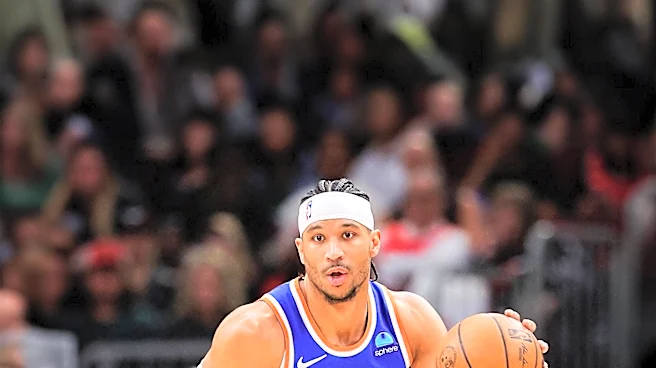
New York Knicks guard Josh Hart is entering the third season of his four-year, $80.9 million deal and is eligible for a new multi-year contract potentially worth up to $132 million. However, the likelihood of him securing such a sum while remaining with
the Knicks is considered low. The team already has significant financial commitments to key players like OG Anunoby, Mikal Bridges, and upcoming extensions for Karl-Anthony Towns and Jalen Brunson. To stay with the Knicks, Hart will likely need to accept a financial compromise. The Athletic staff writer James L. Edwards III suggests a 'sweet spot' agreement of $60-62 million in total, which would provide Hart with financial security and offer the Knicks salary cap flexibility. This proposed deal, while substantial, would be less than what players with similar contributions receive, citing Dillon Brooks' three-year, $73 million deal as an example.
Why It's Important?
This situation highlights the intricate balance NBA teams must strike between retaining valuable players and managing salary cap limitations. For the New York Knicks, a team with championship aspirations, securing Josh Hart at a team-friendly deal is crucial for maintaining roster continuity and financial flexibility. Hart's willingness to potentially forgo a larger payday for the sake of team cohesion reflects a growing trend among players on successful teams, where the pursuit of championships can outweigh individual maximum earnings. This decision could set a precedent for future contract negotiations within the league, particularly for role players on contending teams. The outcome will impact the Knicks' ability to build and sustain a championship-caliber roster, influencing their long-term competitiveness and financial health.
What's Next?
Josh Hart and the New York Knicks are expected to enter contract negotiations, where the primary focus will be finding a financial agreement that satisfies both parties while adhering to the team's salary cap constraints. The 'sweet spot' figure of $60-62 million over a multi-year span, as suggested by James L. Edwards III, will likely be a key point of discussion. Hart's decision will determine whether he prioritizes maximizing his individual earnings or accepts a more team-friendly deal to remain with a championship-contending squad. The outcome of these negotiations will directly influence the Knicks' roster construction for the upcoming seasons and their ability to make further strategic acquisitions or extensions for other foundational talents.
Beyond the Headlines
The contract situation with Josh Hart extends beyond mere financial figures; it delves into the evolving dynamics of player loyalty and team building in the modern NBA. The Knicks have a history of players accepting less than their market value to stay together, indicating a strong team culture and a shared commitment to winning. Hart's decision will be a test of this culture, demonstrating whether the allure of a championship can consistently outweigh the financial incentives of the open market. This trend, if continued, could reshape how teams manage their rosters and how players perceive their value within a successful collective, potentially fostering a more collaborative and less individualistic approach to contract negotiations across the league.