






What's Happening?
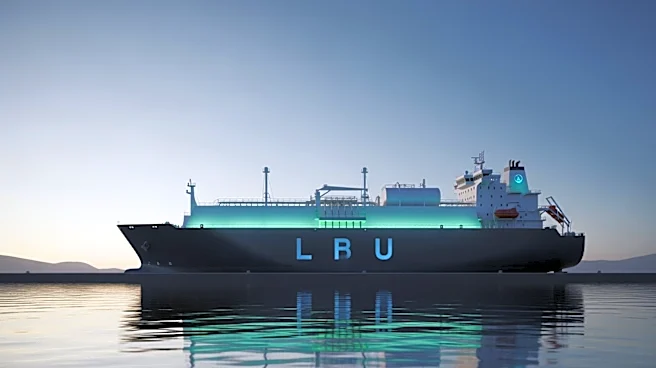
CMA CGM and Capital Clean Energy Carriers have announced the formation of a 50-50 joint venture aimed at expanding LNG bunkering capabilities. This new company will focus on constructing, chartering, and operating a 20,000 cubic meter dual-fuel LNG bunkering vessel.
The joint venture has entered into a shipbuilding contract with Nantong CIMC Sinopacific Offshore & Engineering Co. for the vessel's construction, priced at $82.8 million, with delivery expected in the third quarter of 2028. The vessel will feature advanced emissions reduction systems and efficient dual-fuel power generation to meet global shipping industry environmental standards. Additionally, the joint venture plans to enter a 12-year time charter with a company formed between CMA CGM and TotalEnergies, commencing upon the vessel's delivery.
Why It's Important?
This joint venture represents a significant step in the maritime industry's shift towards cleaner energy solutions. By focusing on LNG bunkering, the partnership between CMA CGM and Capital Clean Energy Carriers aims to reduce emissions and enhance the sustainability of marine fuel supply. The initiative aligns with global efforts to transition to low-carbon alternative fuels, which is crucial for meeting international environmental standards. The collaboration also opens new revenue streams and strengthens the infrastructure needed for LNG to become a more prominent marine fuel, potentially influencing other companies to adopt similar strategies.
What's Next?
The joint venture's next steps include the construction and delivery of the LNG bunkering vessel, expected by 2028. Upon delivery, the vessel will commence a 12-year charter with a CMA CGM and TotalEnergies joint venture, marking the operational start of this new LNG bunkering capability. The success of this venture could lead to further collaborations and investments in LNG infrastructure, encouraging broader adoption of LNG as a marine fuel. Stakeholders in the maritime industry will likely monitor the project's progress and its impact on emissions reduction and fuel supply diversity.