


What's Happening?
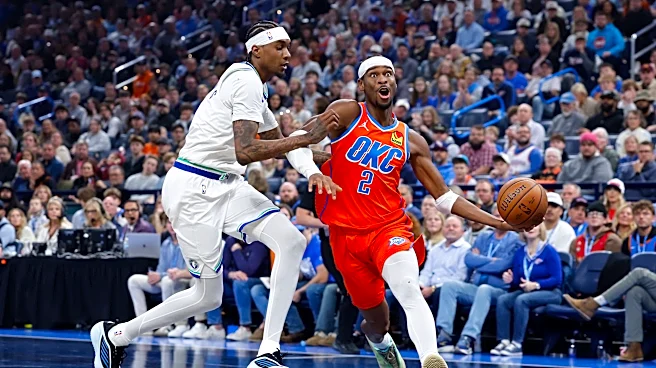
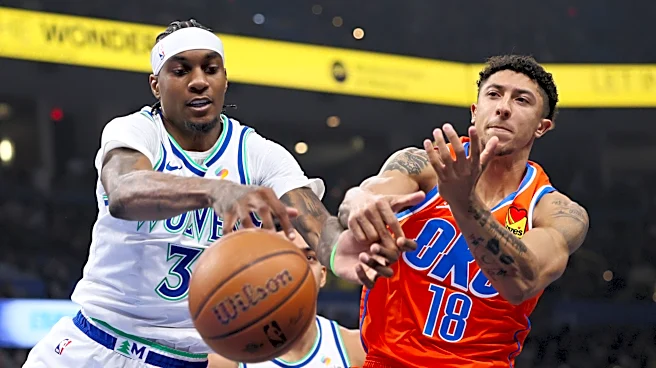
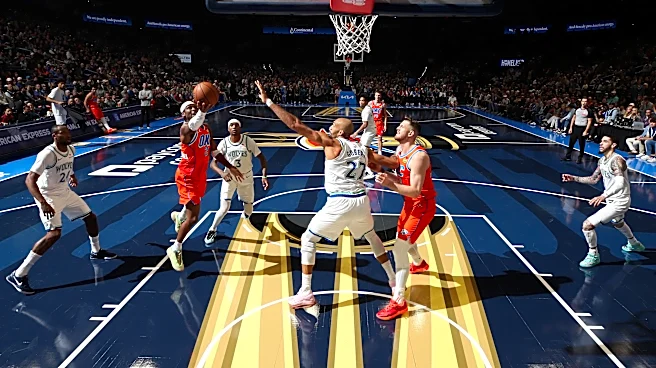
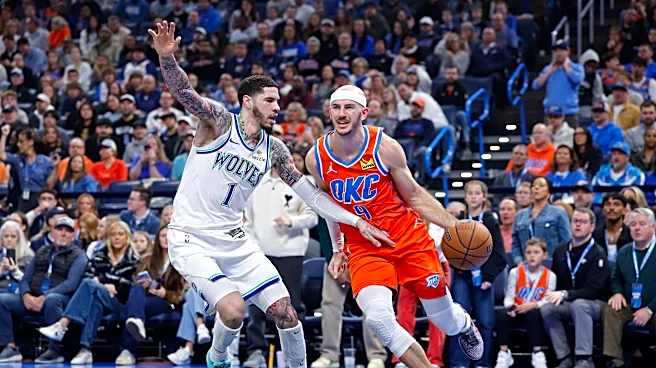
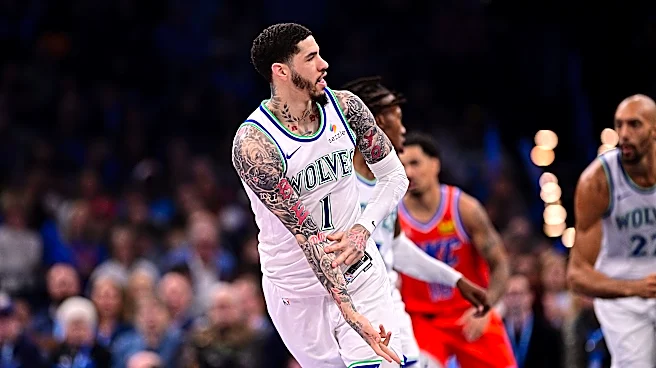
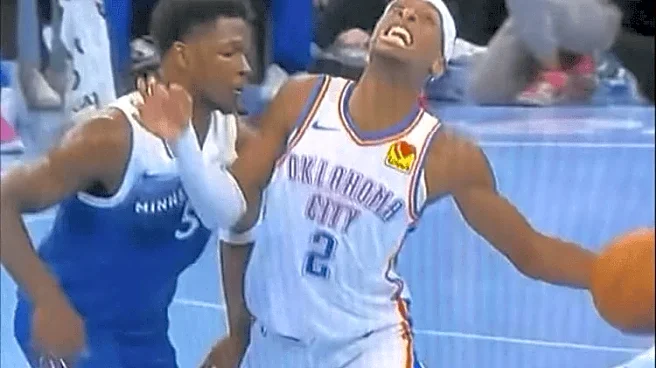
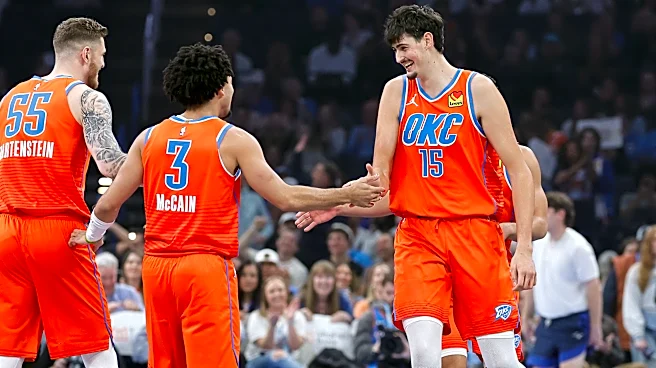
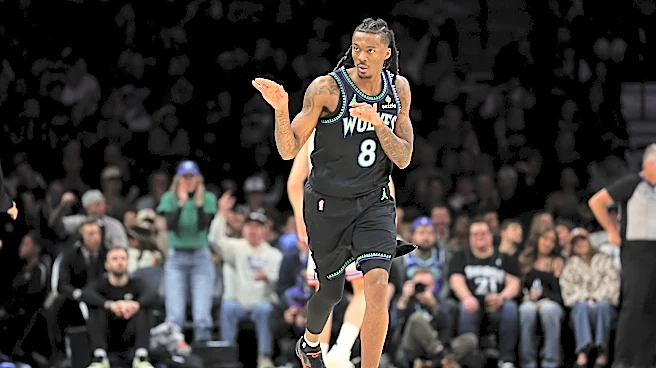
The Oklahoma City Thunder are experiencing significant challenges in defending against opponents' three-point shots, a problem highlighted in their recent 113-106 loss to the Minnesota Timberwolves. During this game, the Timberwolves successfully made
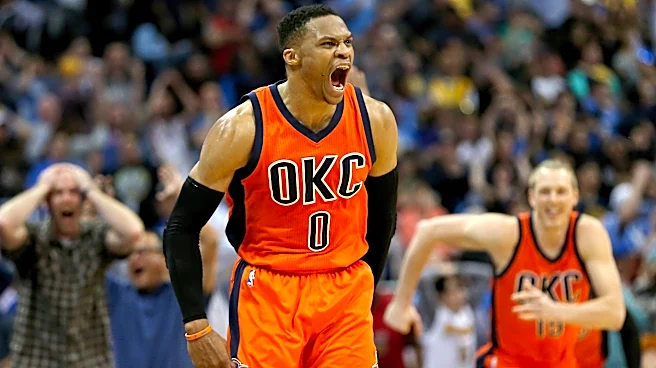
44% of their deep shots, totaling 17 three-pointers. In contrast, the Thunder only managed to hit 33% of their own three-point attempts. This issue is not new for OKC; they currently allow the most three-point shots made per game in the league, with opponents averaging 15.3 successful attempts. While the Thunder also face the most three-point attempts per game (42.8), their defense struggles to contain these shots, allowing opponents to convert 35.8% of them. This defensive vulnerability has worsened compared to last season, where opponents made 14.3 shots per game from deep, but other aspects of OKC's defense and offense were stronger.
Why It's Important?
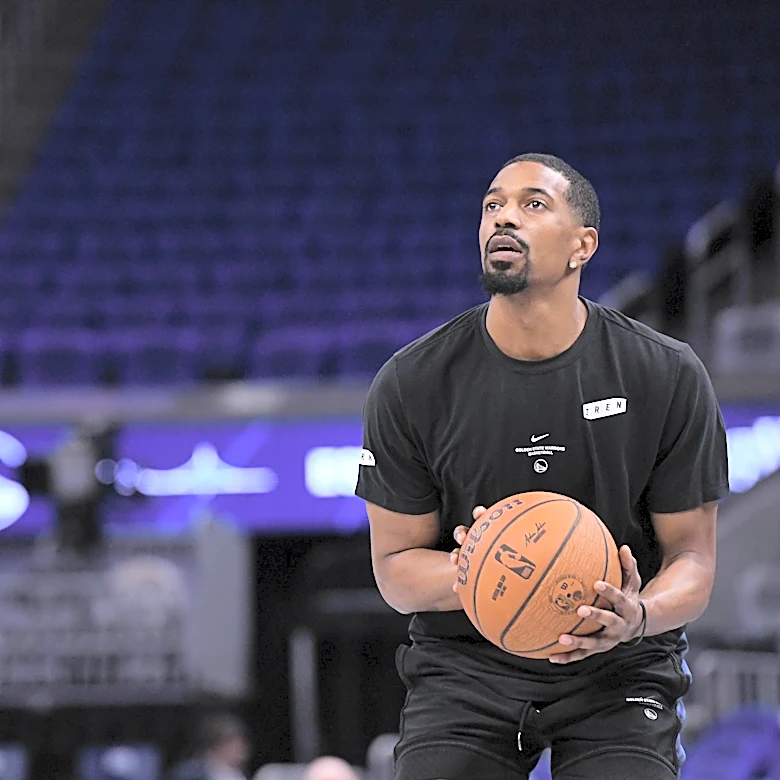
The Thunder's persistent struggle with three-point defense has significant implications for their performance and standing in the NBA. In a league increasingly reliant on perimeter shooting, failing to contain opponents from beyond the arc can severely impact game outcomes and overall team success. This defensive weakness, coupled with recent injuries to key players like Jalen Williams, Cason Wallace, and Chet Holmgren, exacerbates the team's difficulties. The inability to effectively guard the three-point line forces the team to expend more energy on defense, potentially leading to fatigue and reduced offensive efficiency. For fans and stakeholders, this trend raises concerns about the team's competitiveness and its ability to contend for championships, especially as the season progresses and playoff implications become more pronounced. The team's current trajectory suggests a need for strategic adjustments to address this fundamental defensive flaw.
What's Next?
The Oklahoma City Thunder must urgently find a solution to their three-point defense issues. While the return of injured players like Chet Holmgren and rookie Aday Mara is anticipated to bolster their defense, the team needs to implement immediate tactical adjustments. This could involve changes in defensive schemes, increased focus on perimeter defense in practice, or potential roster moves to acquire players with stronger defensive capabilities. The coaching staff will likely be under pressure to devise strategies that limit opponents' open looks from deep and improve close-out techniques. The team's ability to adapt and improve in this area will be crucial for their performance in upcoming games and their overall standing in the league. Until these issues are addressed, the Thunder may continue to face an uphill battle against teams proficient in three-point shooting.
Beyond the Headlines
The Thunder's defensive woes against three-point shooting highlight a broader trend in modern basketball, where the three-point shot has become a dominant offensive weapon. Teams that cannot effectively defend the perimeter often find themselves at a significant disadvantage, regardless of their offensive prowess. This situation also underscores the impact of player injuries on team dynamics and strategic execution. The absence of key defensive players can expose systemic weaknesses that might otherwise be masked. Furthermore, the ongoing struggle could influence future team building decisions, potentially leading to a greater emphasis on acquiring versatile defenders who can guard multiple positions and contest perimeter shots. The long-term success of the Thunder will depend not only on the return of their stars but also on their ability to evolve their defensive philosophy to counter the league's evolving offensive strategies.