




What's Happening?
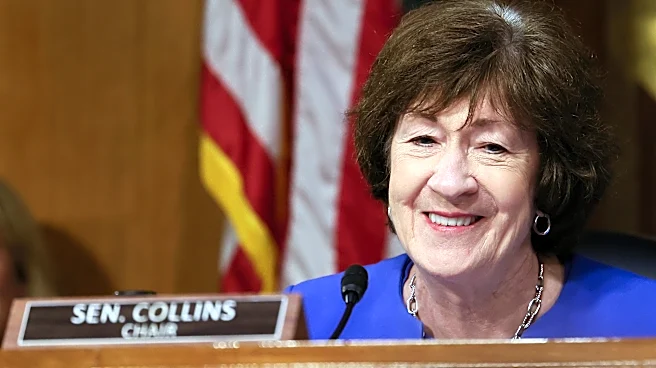
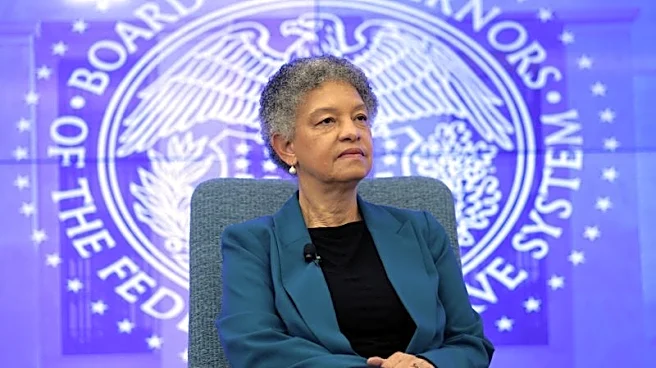
Susan Collins, President of the Federal Reserve Bank of Boston, has indicated that a gradual approach to interest rate hikes will be appropriate to manage inflation, which she observes is broadening across the economy. While acknowledging the need for
further monetary tightening, Collins emphasized a steady, modest pace for these increases. She noted that price pressures have been elevated for an extended period and that the labor market is gaining solid footing without significantly contributing to price increases. Collins, who does not vote on monetary policy this year, suggested that the eventual level of interest rates might be higher than previously assumed. The federal funds rate currently stands between 3.75% and 4.00%, with market expectations pointing to further hikes in December and January.
Why It's Important?
President Collins's statements provide insight into the Federal Reserve's strategy for addressing persistent inflation. Her emphasis on a 'gradual' path for interest rate hikes suggests a cautious approach aimed at curbing inflation without unduly disrupting economic activity or the labor market. The observation that price pressures are broadening indicates a more entrenched inflationary environment, potentially requiring sustained monetary policy intervention. The potential for higher-than-anticipated interest rates could impact borrowing costs for consumers and businesses, influencing investment decisions and overall economic growth. This measured approach reflects the Fed's dual mandate of maintaining price stability and maximizing employment, balancing the need to cool inflation with concerns about economic stability.
What's Next?
The Federal Reserve is expected to deliver further interest rate hikes in the near future, with market participants anticipating increases in December and January. President Collins's remarks suggest that while the Fed will continue to tighten monetary policy, it will likely do so incrementally. Policymakers will closely monitor economic indicators, including inflation data and labor market conditions, to determine the pace and extent of future rate adjustments. The ongoing risks of economic shocks and the potential for rising medium-to-longer-term rates to weigh on demand will also be key considerations. The trajectory of interest rates will have significant implications for various sectors of the U.S. economy, including housing, consumer loans, and credit card debt.
Beyond the Headlines
The Federal Reserve's approach to inflation, as articulated by President Collins, highlights the delicate balance central banks must strike in managing economic cycles. The concept of 'gradual' hikes reflects a strategy to avoid abrupt shocks to the financial system while still addressing inflationary pressures. The broadening of inflation across goods and services suggests that the issue is not confined to specific sectors but is becoming more systemic, posing a greater challenge for policymakers. This situation also underscores the importance of public expectations regarding inflation, as consumer beliefs about future price stability can influence current spending and wage demands. The Fed's actions will not only shape the immediate economic landscape but also influence long-term economic stability and growth prospects.