



What's Happening?
Ford Motor Co. has established a new subsidiary, Ford Energy, and is retooling one of its battery plants in Glendale, Kentucky, to produce stationary battery storage systems. This strategic shift comes as the demand for electric vehicles (EVs) has been
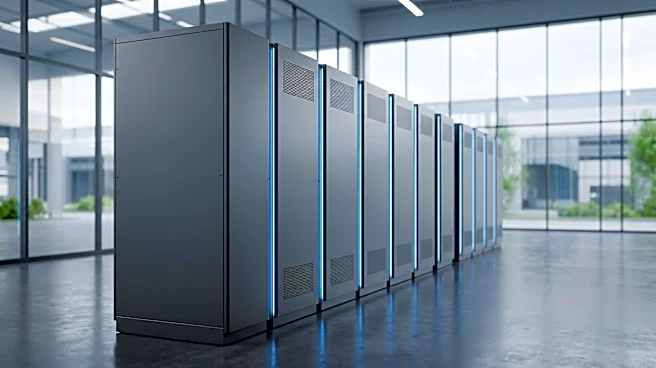
lower than anticipated, leading to overcapacity in EV battery manufacturing facilities. The retooling is expected to commence next year, with Ford executives betting on this new venture to help improve the profitability of the automaker's Model e EV division by 2029. Potential customers for these stationary storage systems include utility companies, industrial manufacturers, and data centers. This move allows Ford to adapt its existing battery production infrastructure to a growing market need, while also maintaining the flexibility to revert to EV battery production if market dynamics change. The company has taken full control of the Kentucky site after dissolving a joint venture with SK On Ltd. and has a five-year framework agreement with EDF power solutions North America, a subsidiary of France's EDF Group, which is deploying grid-scale energy storage projects across the United States.
Why It's Important?
This initiative by Ford is significant as it highlights a broader trend among automakers to diversify their battery manufacturing capabilities beyond electric vehicles. The pivot to stationary energy storage systems addresses the current overcapacity in EV battery plants, which has resulted from fluctuating EV demand and policy changes, such as the elimination of a federal tax credit for plug-in vehicles. By targeting data centers, utility companies, and industrial manufacturers, Ford is tapping into a high-margin business with growing demand, particularly driven by the expansion of artificial intelligence and the need for grid stability. This diversification could provide a crucial revenue stream and stabilize the financial performance of their EV divisions. Furthermore, it positions Ford to contribute to the broader energy transition by providing essential infrastructure for renewable energy integration and grid resilience, which are critical for the U.S. energy landscape. The ability to repurpose existing facilities also demonstrates an agile response to market shifts, potentially mitigating financial risks associated with the volatile EV market.
What's Next?
Ford Energy is slated to begin producing stationary battery storage systems next year from its retooled Glendale, Kentucky plant. The company is actively engaging with potential customers, including utility companies, industrial manufacturers, and data centers, to secure contracts for its projected 20-gigawatt-hour capacity by 2027 and beyond. The success of this venture will depend on its ability to effectively penetrate the energy storage market and manage potential public and political scrutiny, especially concerning the environmental impact of data centers. While Ford has not yet announced specific deals with data centers, its existing framework agreement with EDF power solutions North America suggests a clear path for deployment in grid-scale projects. The company's strategy also allows for a potential reversal to EV battery production if the market for electric vehicles strengthens, offering a flexible approach to its manufacturing assets. The broader industry will be watching to see if other automakers follow suit in repurposing their EV battery facilities for stationary storage.
Beyond the Headlines
Ford's strategic pivot into stationary battery storage systems carries deeper implications for the U.S. industrial landscape and energy policy. This move underscores the increasing convergence of the automotive and energy sectors, driven by advancements in battery technology and the growing need for robust energy infrastructure. The controversy surrounding data centers, particularly their environmental impact and energy consumption, could pose a 'tightrope' for automakers like Ford. While providing energy storage solutions for data centers can help alleviate strain on the electrical grid and support renewable energy integration, public opposition to data center developments could inadvertently affect companies supplying them. This situation highlights the complex interplay between technological advancement, environmental concerns, and public perception. Furthermore, the flexibility to switch between EV and stationary battery production could set a precedent for manufacturing adaptability, influencing future industrial investment and policy decisions aimed at fostering a resilient and diversified domestic battery supply chain.