




What's Happening?
Amazon is backing 5 gigawatts of new nuclear power by 2039, with small modular reactor (SMR) developer X-energy playing a key role. This initiative is part of Amazon's broader commitment to achieve net-zero carbon emissions by 2040 and reduce the carbon intensity
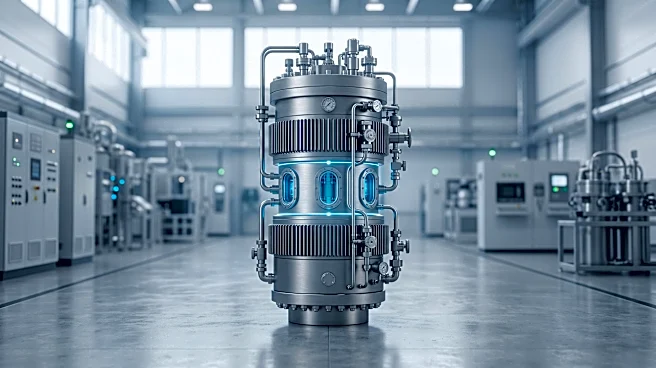
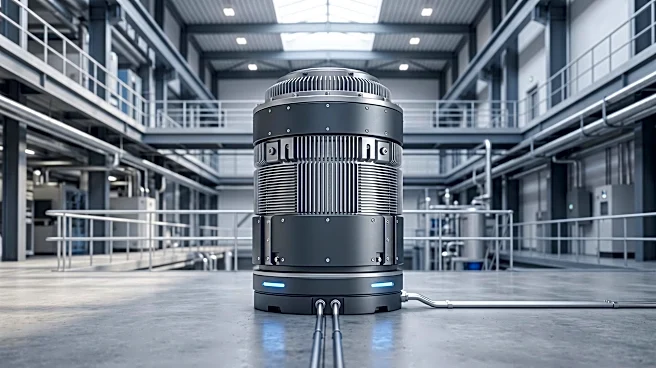
of its operations by 65% compared to 2019 levels. Nuclear energy is considered crucial for powering data centers, which require carbon-free, reliable, 24/7 baseload power. Amazon became an early investor in X-energy in October 2024 through its $2 billion Climate Pledge Fund, providing essential project and development funds. X-energy develops the Xe-100 SMR, a high-temperature, gas-cooled nuclear reactor that uses graphite pebbles packed with uranium particles and helium gas for cooling. These SMRs are designed to naturally shut down and passively dissipate heat without human intervention, and they can be manufactured in modular factory units and linked together to produce significant power, such as the 12-unit, 960 MW project planned in Indiana.
Why It's Important?
Amazon's substantial investment in X-energy and its commitment to nuclear power highlight a growing trend among hyperscalers like Microsoft, Meta Platforms, and Alphabet to secure clean energy for their power-hungry data centers. This move is significant for the U.S. energy sector, as it underscores the increasing demand for stable, carbon-free energy sources to complement intermittent renewables like wind and solar. For X-energy, Amazon's backing provides a powerful financial and strategic advantage, potentially accelerating the development and deployment of its SMR technology. The success of SMRs could revolutionize nuclear energy production by offering a more flexible, scalable, and potentially safer alternative to traditional large-scale nuclear plants. This partnership could also stimulate further investment and innovation in the U.S. nuclear industry, creating new jobs and strengthening energy independence.
What's Next?
The partnership between Amazon and X-energy is expected to advance the design, licensing, and construction of X-energy's nuclear fuel facility and the deployment of Xe-100 SMRs. The planned 12-unit, 960 MW project in Indiana serves as a significant benchmark for future SMR deployments. As the artificial intelligence (AI) boom continues to drive demand for data centers, the need for reliable and carbon-free power will only intensify, potentially leading to more agreements between technology giants and nuclear energy developers. The progress of X-energy's projects will be closely watched as a case study for the viability and scalability of SMR technology in meeting industrial energy demands and carbon reduction goals. Regulatory approvals and successful operational demonstrations will be critical next steps for X-energy and the broader SMR industry.
Beyond the Headlines
This collaboration signifies a broader shift in how major corporations are addressing their energy needs and environmental commitments. By investing directly in advanced nuclear technology, Amazon is not only pursuing its net-zero goals but also influencing the future direction of the U.S. energy landscape. The modular nature of SMRs could lead to decentralized power generation, offering greater resilience and flexibility compared to centralized power grids. Furthermore, the emphasis on passive safety features in SMRs like the Xe-100 could help address public concerns about nuclear safety, potentially paving the way for wider acceptance and adoption of nuclear power. This development could also spur a new wave of innovation in nuclear engineering and manufacturing, positioning the U.S. as a leader in next-generation nuclear technology.