






What's Happening?
Researchers at Kentucky State University have highlighted the growing importance of artificial intelligence (AI) in controlled environment agriculture. A recent review published in the Journal of the American Society for Horticultural Science discusses
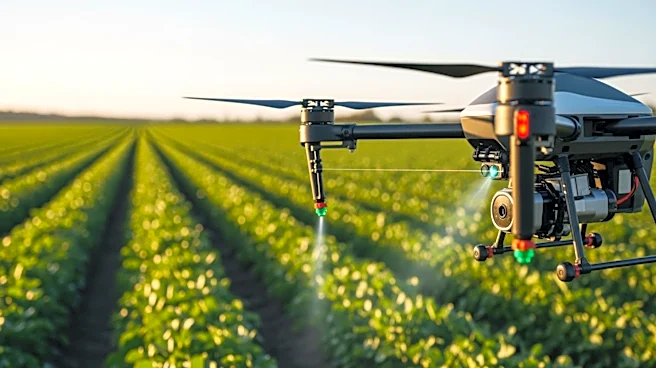
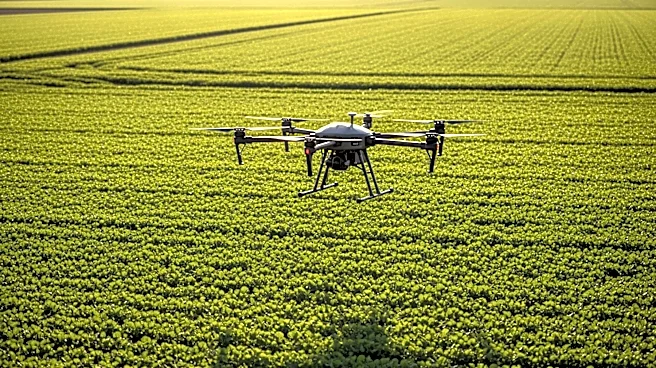
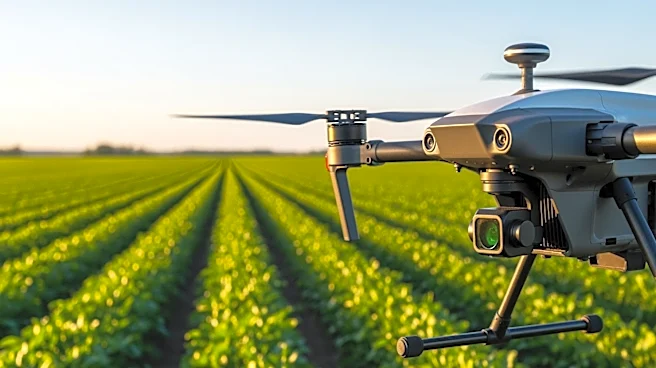
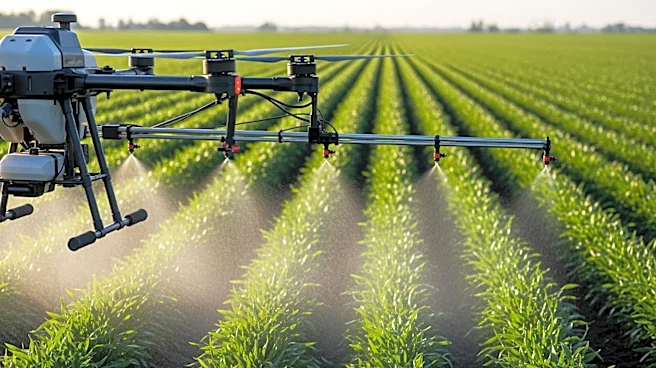
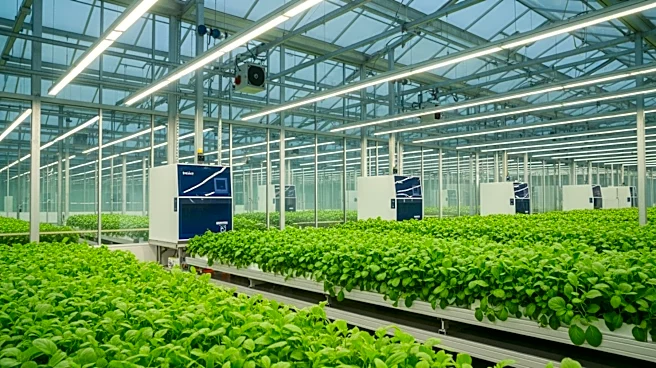
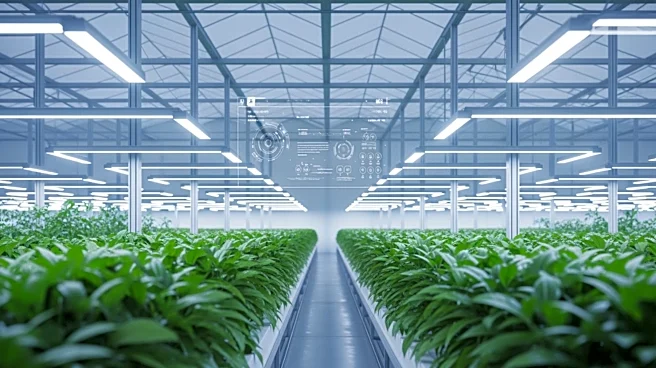
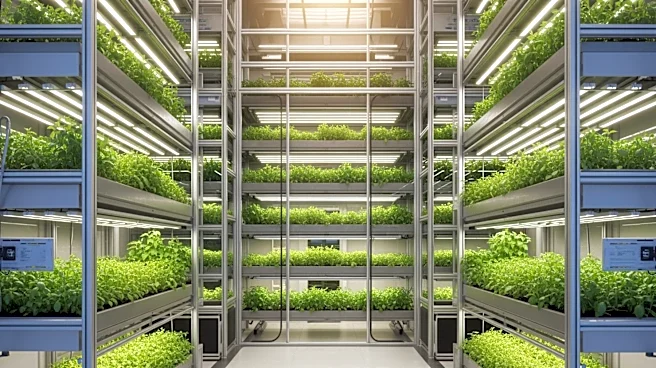
how AI technologies are enhancing productivity and decision-making in modern farming systems. The study focuses on controlled environment agriculture systems such as greenhouses, hydroponic facilities, vertical farms, and high tunnels. AI tools are being used to analyze data from sensors, cameras, and crop-monitoring devices, improving disease detection, irrigation scheduling, lighting control, crop forecasting, and automation efficiency.
Why It's Important?
The integration of AI in agriculture represents a significant advancement in the quest for more sustainable and efficient food production systems. By optimizing resource use and improving crop management, AI can help address challenges such as labor shortages, climate change, and food security. The ability to detect problems earlier and respond more effectively can lead to higher yields and reduced waste, benefiting both producers and consumers. As the global population continues to grow, the adoption of AI in agriculture will be crucial for meeting the increasing demand for food while minimizing environmental impact.
What's Next?
For AI to be widely adopted in agriculture, there will need to be advancements in data systems, producer education, and privacy protections. Clear guidelines for agricultural data use will also be essential. Researchers and industry leaders will need to collaborate to develop user-friendly AI tools that are accessible to farmers of all scales. As technology continues to evolve, the potential for AI to transform agriculture will likely expand, offering new opportunities for innovation and growth in the sector.