








What's Happening?
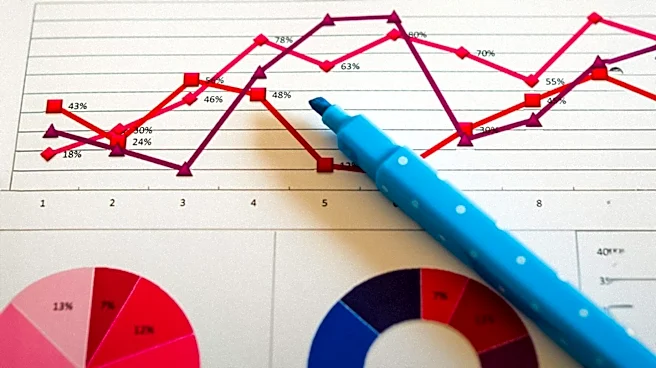
Predictive analytics is a data analysis method that employs historical data, statistical models, and machine learning to forecast future outcomes. Unlike inferential statistics, which focuses on drawing conclusions about a larger population from sample
data, predictive analytics aims to estimate what is likely to occur next. This approach helps businesses anticipate future performance, identify customers prone to churn, predict demand, uncover potential obstacles, and refine strategic plans. For instance, predictive models are applied in healthcare to assess patient risks and in financial institutions for credit risk evaluation and fraud detection. In education, predictive analytics can identify students who might require additional support by analyzing existing data patterns, though it does not predetermine a student's future or automatically trigger interventions.
Why It's Important?
The widespread adoption of predictive analytics holds significant importance for various U.S. industries and economic stakeholders. Businesses can gain a competitive edge by accurately forecasting market trends and consumer behavior, leading to more informed decision-making in areas like inventory management, marketing campaigns, and product development. In the financial sector, enhanced fraud detection and credit risk assessment can mitigate losses and improve financial stability. Healthcare providers can leverage these insights to proactively manage patient care, potentially reducing costs and improving health outcomes. The ability to anticipate future events allows organizations to optimize resource allocation, minimize risks, and capitalize on emerging opportunities, ultimately contributing to economic efficiency and growth across multiple sectors.
What's Next?
The continued evolution of predictive analytics is expected to lead to more sophisticated models and broader applications across industries. As data collection methods advance and machine learning algorithms become more powerful, the accuracy and scope of predictions will likely increase. Businesses will continue to integrate predictive analytics into their core operations, moving beyond reactive strategies to proactive, data-driven decision-making. This will necessitate ongoing investment in data infrastructure, specialized talent, and ethical guidelines to ensure responsible and effective use of these powerful tools. The development of user-friendly predictive analytics platforms may also democratize access, allowing smaller businesses and organizations to leverage these capabilities.
Beyond the Headlines
Beyond its immediate practical applications, predictive analytics raises deeper ethical and societal considerations. The reliance on historical data for predictions can perpetuate existing biases if the data itself is not representative or fair. This could lead to discriminatory outcomes in areas like credit scoring, employment, or even criminal justice. Furthermore, the increasing ability to predict individual behavior raises concerns about privacy and the potential for manipulation. Striking a balance between leveraging the benefits of predictive insights and safeguarding individual rights and societal equity will be a critical challenge. The long-term impact on decision-making processes, potentially shifting from human intuition to algorithmic recommendations, also warrants careful consideration regarding accountability and transparency.