









What's Happening?
Volkswagen Chief Executive Oliver Blume has announced that the company will not be shutting down its German factories, opting instead for 'smarter solutions' to cut costs. This decision comes after the supervisory board rejected Blume's broader restructuring
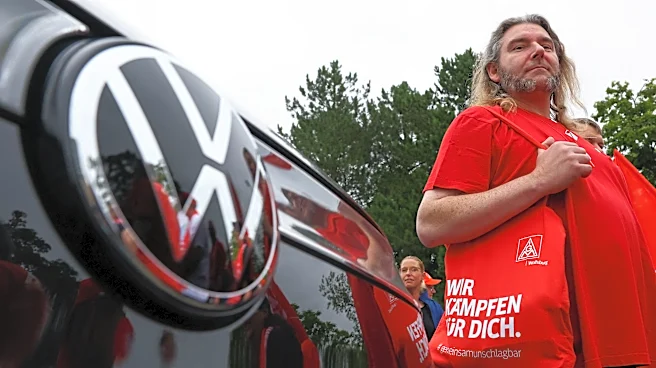
plan, which included potential job losses and plant closures. Blume emphasized that Volkswagen has already achieved significant cost reductions at its German sites, averaging a fifth in savings by 2025. However, he did not provide specific details on the alternative measures to be implemented. The rejection of the plan followed speculation about an internal document outlining a staged closure timeline for several plants, which employ around 40,000 people. The works council has expressed a loss of trust in Blume, citing fear and uncertainty among the workforce.
Why It's Important?
The decision by Volkswagen's CEO to avoid factory closures is significant as it addresses the concerns of the workforce and the works council, which have been vocal about their distrust and fear of job losses. The move is crucial for maintaining employee morale and stability within the company. Additionally, the rejection of the restructuring plan highlights the ongoing tension between the need to cut costs and the desire to preserve jobs. This situation is further complicated by Volkswagen's declining sales, particularly in China, where it has lost its sales lead to BYD. The outcome of this decision could impact Volkswagen's ability to remain competitive in the global market, especially as it faces structural challenges within the German automotive industry.
What's Next?
Volkswagen's CEO will need to provide more clarity on the 'smarter solutions' proposed to reassure the workforce and stakeholders. The company may explore partnerships or repurpose production sites to achieve the necessary cost savings. Blume is expected to address the workforce directly in meetings scheduled after the summer break, which will be crucial for rebuilding trust. The company's performance in the coming quarters, particularly in key markets like China, will be closely monitored to assess the effectiveness of the new strategies. The outcome of these efforts will likely influence future decisions regarding job cuts and plant closures.