



What's Happening?
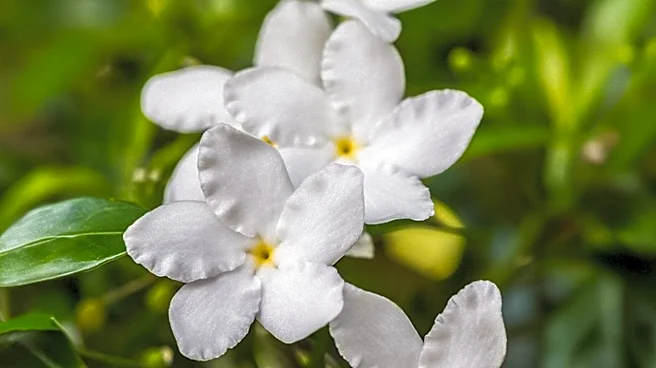
The fragrant tea olive, also known as sweet olive or sweet osmanthus (Osmanthus fragrans), is being highlighted as an excellent alternative to gardenias for creating a fragrant garden. This evergreen shrub is visually appealing and emits a sweet scent
reminiscent of apricots or cotton candy. It typically blooms with delicate white flowers in the fall, and in some regions, these fragrant blooms can persist throughout the year. The tea olive is also noted for its year-round appeal due to its evergreen nature, ensuring it contributes to the garden's aesthetic even when not in bloom. It is considered easy to grow and low-maintenance, making it suitable for beginner gardeners. The plant thrives in clay-textured, well-drained soil and benefits from regular moisture, though it can tolerate occasional dry spells.
Why It's Important?
For U.S. homeowners and garden enthusiasts, the fragrant tea olive offers a versatile and accessible option for enhancing outdoor spaces. Its low-maintenance nature makes it particularly appealing to those new to gardening or with limited time for upkeep, potentially increasing participation in home gardening. The plant's year-round visual appeal and extended blooming period provide continuous aesthetic and aromatic benefits, contributing to improved quality of life and property value. By offering an alternative to more demanding plants like gardenias, it broadens the choices available for creating sensory-rich gardens. This can also influence landscape design trends, encouraging the use of resilient and multi-functional plants in residential and public green spaces across the U.S.
What's Next?
As awareness of the fragrant tea olive's benefits grows, there may be an increased demand for this plant in nurseries and garden centers across the U.S. Horticultural experts and gardening publications might feature it more prominently, leading to wider adoption. We could see more landscape designers incorporating sweet olive into their plans for residential and commercial properties. Research into different varieties and cultivars of Osmanthus fragrans may also expand, offering even more options for specific climates and aesthetic preferences. This trend could encourage a broader appreciation for diverse fragrant plants beyond traditional choices, fostering more varied and resilient garden ecosystems.
Beyond the Headlines
The emphasis on fragrant plants like the tea olive speaks to a deeper desire for multi-sensory experiences in our living environments. Beyond visual beauty, scent plays a powerful role in evoking emotions and creating a sense of place. Incorporating such plants can transform a garden into a more immersive and therapeutic space, contributing to mental well-being. This trend also highlights the importance of plant resilience and adaptability, especially in the face of changing climate conditions, as the tea olive's drought tolerance is a significant advantage. Culturally, it reflects a growing interest in creating personalized and enriching outdoor sanctuaries, moving beyond purely ornamental gardening to a more holistic approach that engages all senses.