
What's Happening?
A new study involving over 12,000 community-dwelling older adults, tracked for 11 years, suggests that regular social and cognitive engagement is significantly associated with slower frailty progression
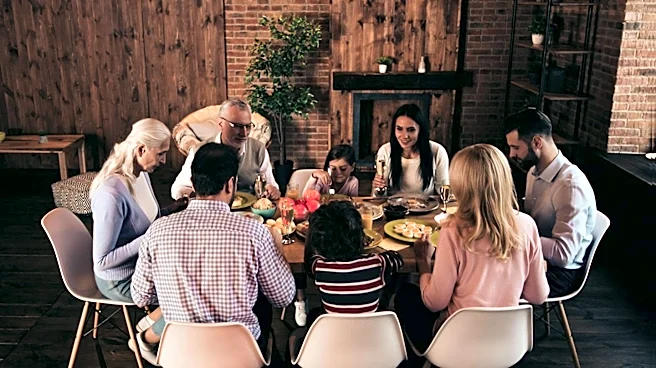
and a reduced risk of developing frailty. The research, drawing from the ASPREE Longitudinal Study of Older Persons (ALSOP), examined various 'lifestyle enrichment' activities across seven domains: passive mental activities (e.g., reading, watching TV), adult literacy (e.g., writing letters, computer use), external outings, interpersonal networks, social activities, creative/artistic engagement, and active mental engagement (e.g., puzzles). The findings indicated that frequent engagement in most of these domains was linked to a slower annual increase in frailty burden, with passive mental activities and adult literacy showing the strongest effects. Even passive activities demonstrated meaningful associations, challenging the notion that only effortful activities contribute to healthy aging.
Why It's Important?
This study shifts the focus of healthy aging beyond traditional physical activity and nutrition, highlighting the critical role of social and cognitive engagement. For public health, these findings suggest that promoting accessible activities like reading, maintaining social connections, and community involvement could be powerful levers for reducing frailty risk across populations. This is particularly important as the U.S. population ages, with frailty posing significant challenges to individual independence and healthcare systems. The study also points to potential disparities, noting that associations were more pronounced among women and individuals with middle-to-high socioeconomic status, implying that equitable access to community resources and social infrastructure is vital for broader impact.
What's Next?
The implications of this research could lead to a greater emphasis on social and cognitive programs in healthy aging initiatives. Policymakers and community organizations may consider investing more in libraries, community centers, social programs, and cultural spaces to foster engagement among older adults. Further research is needed to fully establish the mechanisms through which these activities protect against frailty, but the current findings provide a strong basis for encouraging these habits. Individuals are encouraged to integrate regular reading, social interaction, and community participation into their daily routines, ideally building these habits early in life for maximum protective effect.
Beyond the Headlines
The study's findings underscore the holistic nature of human well-being, demonstrating that mental and social health are deeply intertwined with physical resilience. It challenges a purely biomedical view of aging, suggesting that a sense of purpose, connection, and continuous learning are fundamental to a healthy later life. The observation that passive mental activities are beneficial also has profound cultural implications, validating the value of seemingly simple pleasures like reading or listening to music as essential components of a balanced life. This research could inspire a re-evaluation of societal priorities, emphasizing community building and intellectual engagement as crucial investments in public health and individual longevity.