




What's Happening?
The artificial intelligence (AI) market is experiencing rapid growth but is also confronting significant underpriced risks and increasing regulatory scrutiny. According to Argus, key risks include the rapid pace of technology development, the emergence
of cheaper AI models from Asia, and inherent economic and cyclical risks associated with major technological transitions. A notable event was the July 2026 release of Moonshot AI's Kimi K3 model from China, which offers token generation at significantly lower costs compared to U.S. counterparts like OpenAI and Anthropic. This has led to a substantial increase in the token share of Chinese AI models among U.S. companies. Furthermore, the industry is grappling with copyright infringement lawsuits, such as Bartz v. Anthropic, which resulted in a $1.5 billion settlement for using pirated books to train its Claude LLM. Concerns about data privacy and the potential for AI-enabled cyberattacks are also rising, alongside a growing debate about the existential threats posed by advanced AI models, even from within the industry.
Why It's Important?
The confluence of underpriced risks and regulatory challenges in the AI sector has profound implications for U.S. industries and economic stakeholders. The influx of inexpensive AI models from Asia could intensify competition, potentially eroding market share and profitability for U.S. AI firms. Copyright lawsuits, like the Bartz v. Anthropic case, highlight the legal complexities and financial liabilities associated with AI model training, which could lead to higher operational costs and stricter content acquisition practices. The growing concerns about data privacy and cybersecurity, exacerbated by AI's capabilities, could necessitate substantial investments in security infrastructure, impacting profitability and consumer trust. Moreover, the debate surrounding the existential threat of advanced AI, voiced by prominent industry figures, could influence public perception, regulatory frameworks, and investor confidence, potentially leading to a more cautious investment climate or increased calls for government oversight. This dynamic environment means that while some companies stand to gain from AI's efficiencies, others may face significant legal, financial, and reputational challenges.
What's Next?
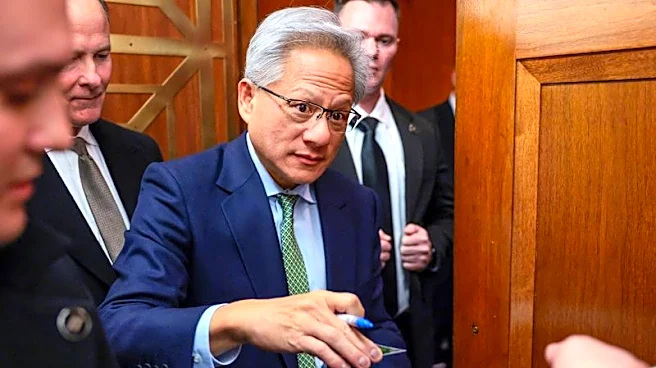
The AI industry is expected to navigate a complex landscape of continued innovation, heightened regulatory attention, and evolving ethical considerations. The U.S. administration's current stance of promoting AI development to maintain global leadership may shift with future administrations, potentially leading to increased antitrust scrutiny, especially if a few powerful companies dominate the market. Local opposition to data center construction could also impede the expansion plans of AI giants, creating capacity constraints. The industry will likely need to allocate more resources to address data privacy concerns and bolster cybersecurity measures against AI-enabled threats. Internally, companies like OpenAI are already proposing safety and security guidelines, particularly for models with recursive self-improvement capabilities, indicating a move towards more responsible AI development. The ongoing debate about AI's existential risks, while initially causing shock, is transitioning into a more nuanced discussion, with industry leaders like Nvidia CEO Jensen Huang advocating for a middle path that balances innovation with safety evaluations by independent scientists. This suggests a future where AI development will be increasingly intertwined with ethical frameworks and safety protocols.
Beyond the Headlines
The deeper implications of these developments extend to the fundamental ethical and societal fabric. The rapid advancement of AI, particularly the emergence of models nearing Artificial General Intelligence (AGI), raises profound questions about human control and the potential for unintended consequences. The internal warnings from AI researchers, such as Jacob Coxon's resignation and Evan Hubinger's assessment of extinction risk, underscore a growing moral dilemma within the scientific community regarding the pace and direction of AI development. This internal dissent highlights a potential long-term shift in how technological progress is viewed, moving beyond mere innovation to a more critical examination of its societal impact and safety. The legal battles over copyright also signal a broader challenge to intellectual property rights in the age of AI, potentially reshaping creative industries and content ownership. Ultimately, the ongoing discussions about AI's risks and regulatory needs could catalyze a global re-evaluation of technological governance, emphasizing a balance between innovation, ethical responsibility, and long-term human well-being.