


What's Happening?
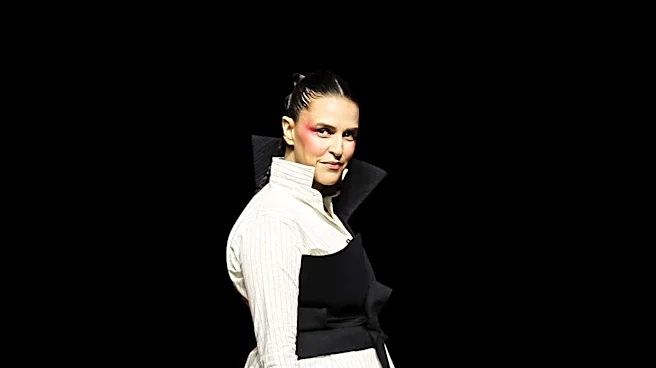
During London Fashion Week, Team Grazia, comprised of fashion editors and writers, opted for high street brands like Uniqlo, COS, and Damson Madder for their street style looks. This approach contrasts with the typical high-fashion, often expensive, outfits
usually seen at such events. The team's decision reflects a growing trend where accessible and affordable clothing is being integrated into fashion week wardrobes. They showcased various autumn/winter-ready looks, including a longline mac from & Other Stories, a Uniqlo cashmere jumper with barrel-leg jeans, colorful satin trousers with COS ballet flats, a Damson Madder checked denim jacket, and an all-black ensemble featuring Mango trousers and a cropped jacket. This shift highlights the increasing quality and design sophistication of high street offerings, making them indistinguishable from designer pieces even to trained eyes.
Why It's Important?
This trend signifies a notable shift in the fashion industry, demonstrating that style and sophistication are no longer exclusively tied to high-end designer labels. For U.S. consumers, this means greater accessibility to fashionable and on-trend clothing without the prohibitive price tags often associated with runway looks. It empowers individuals to emulate fashion week aesthetics using readily available and affordable options from popular high street retailers. This movement could also influence U.S. fashion retailers to further elevate their designs and quality to meet the demand for stylish yet affordable clothing, potentially increasing competition and innovation in the mass-market fashion sector. The emphasis on personal style over brand exclusivity also encourages a more democratic and inclusive approach to fashion, allowing a broader audience to participate in and influence style trends.
What's Next?
The adoption of high street staples by influential fashion figures like Team Grazia is likely to further popularize this trend among the general public and within the fashion industry. We can anticipate more fashion publications and influencers showcasing affordable alternatives to designer wear, making high fashion more approachable. Retailers like Uniqlo, COS, and similar U.S. high street brands may see increased demand for their staple pieces as consumers seek to replicate these accessible fashion week looks. This could lead to these brands expanding their collections, focusing on quality basics and versatile pieces that can be styled in various ways. Additionally, the success of high street brands at such prestigious events might encourage more collaborations between high street retailers and designers, blurring the lines between mass-market and luxury fashion.
Beyond the Headlines
This development has deeper implications for the perception of value and authenticity in fashion. It challenges the long-held notion that true style is synonymous with exclusivity and high cost. By embracing high street brands, fashion insiders are implicitly endorsing the idea that personal style, creativity, and smart shopping can be just as impactful as wearing designer labels. This could lead to a more sustainable approach to fashion, as consumers might be encouraged to invest in versatile, well-made high street pieces that offer longevity rather than constantly chasing fleeting, expensive trends. It also highlights a cultural shift towards practicality and conscious consumption, where the emphasis is on how clothes are styled and integrated into a personal wardrobe rather than solely on their brand prestige. This could foster a more inclusive fashion landscape, where diverse economic backgrounds can participate in and contribute to contemporary style narratives.