




What's Happening?
Scout Motors, a brand under the Volkswagen Group, intends to establish seven corporate-owned dealerships, referred to as 'workshops,' across Canada by 2033. This expansion plan is proceeding despite potential tariffs and pending trade agreements between
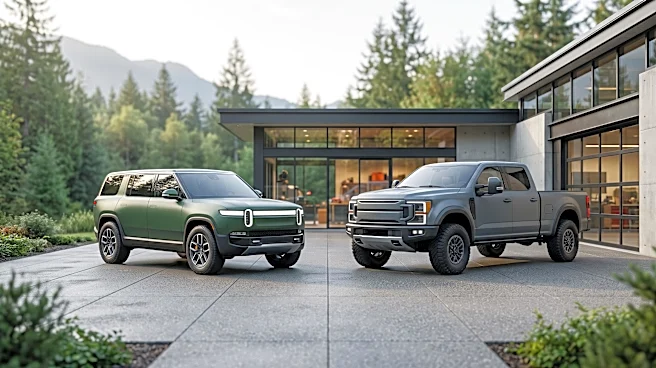
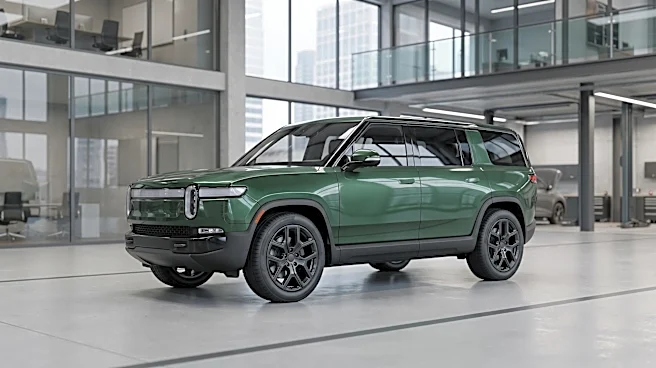
Canada, the U.S., and Mexico, according to Automotive News. The company's strategy includes opening three stores in Toronto, two in Montreal, and one each in Ottawa and Vancouver. Scout Motors plans to launch its electric pickup, the Terra, and SUV, the Traveller, in 2028. These retro-futuristic electric vehicles will be manufactured in California, with batteries supplied by PowerCo, an Ontario-based company also part of the Volkswagen Group. While exact Canadian-market pricing and launch timing for these models are not yet disclosed, Canadian customers can currently place orders.
Why It's Important?
This strategic move by Scout Motors signifies a significant investment in the North American electric vehicle market, particularly in Canada. The establishment of corporate-owned dealerships, rather than a franchise model, indicates a desire for direct control over customer experience and brand messaging, mirroring strategies used by other EV manufacturers. The decision to source batteries from PowerCo, an Ontario-based company, highlights a commitment to regional supply chains within the Volkswagen Group's broader operations. This could foster economic growth and job creation in the Canadian manufacturing sector. Furthermore, the introduction of new electric trucks and SUVs will intensify competition in the rapidly expanding EV segment, offering more choices for consumers and potentially accelerating the adoption of electric vehicles across Canada and North America.
What's Next?
Scout Motors is expected to provide more specific details regarding the exact timing for the opening of each Canadian dealership and the official launch dates and pricing for the Terra and Traveller models in the Canadian market. The company will also need to navigate the evolving landscape of trade agreements and tariffs between Canada, the U.S., and Mexico, which could impact its operational costs and market strategy. As the 2028 launch of the Terra and Traveller approaches, further information on production capacity in California and the integration of PowerCo's batteries will likely emerge. The success of these initial Canadian dealerships will be crucial in determining Scout Motors' long-term expansion strategy in the region.
Beyond the Headlines
Scout Motors' approach to establishing corporate-owned dealerships could set a precedent for how new automotive brands enter and expand in international markets, particularly within the EV sector. This model allows for greater brand consistency and direct control over sales and service, potentially leading to a more unified customer experience. The emphasis on 'workshops' rather than traditional dealerships suggests a modern, service-oriented approach that aligns with the evolving expectations of EV owners. The decision to build vehicles in California while sourcing batteries from Ontario also underscores the complex, interconnected nature of modern automotive supply chains and the increasing importance of regional manufacturing hubs for critical components like EV batteries. This could influence future investment decisions and industrial policies in both the U.S. and Canada.